Friday, 2 February 2018

Education - Personal Learning Networks, Connectivism and Leading Change


Week 9 - Personal Learning Networks, Connectivism and Leading Change


This weeks class started with a challenge - we were given 10min to find out where John P Kotter might be right now. We worked in small groups and each of us had some different ideas, some used social networks like Facebook, Linkedin and other digital tools like wikipedia, whitepages, Google Maps or world clocks etc. Together we worked quickly in putting together and cross checking our information. We found out his age, home address, and work location etc. This was a great example of connectivism in action, technology has enabled us to connect and collaborate beyond our physical environment and we are able to draw on a range of perspectives and collaboratively generate and critique new ideas. This is a relatively new view of how technology has changed how, and what we learn.

Prior to class were were asked to read part of ‘A Learning Theory for the Digital Age’ by Siemens, G. (2004). These were some of the key ideas about this theory of connectivism:
  • Many learning theories were developed prior to the digital age such as behaviourism and constructivism. Informal learning is now a big part of our lives. Most older learning theories focus on learning that occurs within a person and don’t address learning that happens outside of themselves like learning that is stored and manipulated by technology.
  • Older learning theories don’t really describe learning that happens within organisations.
  • Older learning theories tend to focus on how we learn not so much what is learnt.
  • Connectivism looks at the complexities of learning as a network and environment that cannot be entirely controlled by an individual. 
  • Connectivism is based on decisions being made on rapiding moving foundations.
  • It is vital to understand the flow of information in an organisation and how it is formed as links between people.
  • Connectivism realises that complete knowledge doesn’t lie in the mind of one person so requires a different approach to leadership.
  • Diverse teams and innovation are key in truely exploring ideas.
I think the view of connectivism is very relevant and evident in the underlying philosophies of our school. We believe that the ability to learn is more important that what you have learnt. That given the uncertain future and impact of digital technologies students will need to be able to work out what they know and what they need to do next to solve problems and interact with their environment and connected networks to learn and create the required knowledge. Connectivism is way to understand the skills and dispositions needed for students to be successful in the 21st century.

At our school this is kind of understanding is very evident in our vision statement and underlying philosophies that were based on some interesting New Zealand research such as this report about future orientated teaching and learning from the OECD. Our school vision is ‘To empower our people to be connected, collaborative, community minded learners inspired to soar’. We acknowledge that learning occurs in all aspects of our lives and that learning happens within the wider the social and emotional contexts and that our interaction and connection with the environment and networks is infact how we learn. This is very much like the view of connectivism in that our ability to learn what is needed for tomorrow is more important than what we know today. I feel connectivism is a great progressive description of how we view learning at our school.

This week we also looked at a Personal Learning Networks video. A PLN consists of the people or organisations that influence our learning. In pairs we discussed each others networks and created an infographic. We used online tools such as Piktochart or Canva. Again it was a reminder about how technology has enabled us to be so well connected personally, nationally, and globally.

We then went on to look at how connectivism has come about as it a fairly recent theory, which makes sense as the developments in technology are really quite recent. It also now makes sense to me that Massive Online Learning Communities (MOOCs) came about as a response to the new ideas of connectivism, and also reminds me of ‘un-conference’ and ‘pechakucha’ type learning sessions I've experienced.

This lead on to looking at a collection of essays that Stephen Downes had put together about connectivism. Some really interesting ideas were presented and in summary we found that connectivism is about creating learning objects on the fly, learning is what we create with others, and we have the tools.

We also looked at influences on leadership and we used an online tool called Coggle to create a collaborative brainstorm/diagram. We briefly looked at the differences between management and leadership, and came to the conclusion that we probably have a good idea about the differences but it’s probably not always so easy to implement. I believe we have all probably had great discussions at some point with people about aspects like I vs we, command vs ask, know vs shows etc.

Kotters’ views for successful change suggests a vision is very important. Getting people involved to collaborate a vision for change and then we need to communicate the vision often. We should remove obstacles and focus energy there and also recognise people’s efforts.

Kotter (1996) describes 8 steps for successfully leading change.
  1. Create a sense of urgency (identify crises and opportunities)
  2. Build a guiding team
  3. Develop a vision and strategy
  4. Communicate the vision
  5. Enable action by removing barriers
  6. Creating and celebrating short term wins
  7. Sustain change by building on gains
  8. Embed the change in culture
The first 3 steps are vital in creating the climate for change, the next 3 involve and enable the organisation to change, the last two are about implementing and sustaining the change. It can be a messy process and by developing the vision it can guide people through and less errors might be made along the way.

People will be intrinsically motivated if they share the vision and have a sense of purpose, and work with peers to solve difficult problems. I will need to keep this in mind when planning and implementing e-learning objectives at our school. There is more information here about Kotters 8 Step Process for change. Also the PPTA have a toolkit for change mangement - PPTA toolkit for change management.

References
Bolstad, R. Gilbert, J. McDowall, S. Bull, A. Boyd, S. & Hipkins, R. (21012). Supporting future-oriented learning and teaching: A New Zealand perspective. New Zealand Council for Educational Research.Retrieved from https://www.educationcounts.govt.nz/publications/schooling/supporting-future-oriented-learning-and-teaching-a-new-zealand-perspective. Accessed 3 Feb. 2018.

Kotter, J. (1996). Leading Change. Boston, Mass.: Harvard Business Review Press.

Siemens, G. (2004). Connectivism: A Learning Theory for the Digital Age. eLearnSpace. Retrieved from http://www.elearnspace.org/Articles/connectivism.htm. Accessed 3 Feb. 2018.

Sunday, 28 January 2018

Education - Diffusion of Innovations and Digital Leadership & Design Thinking in the Classroom

Week 8 - Diffusion of Innovations and Digital Leadership & Design Thinking in the Classroom

Prior to class we were asked to watch a video about Design Thinking and reflect on the role of feedback at each stage. Design Thinking is a method for how to come up with ideas, it seems to be particularly good for complex projects and problems. It involves interdisciplinary teams, prototyping and trying out possible solutions.

It is essentially a process with the following key stages and it is not really linear as it is iterative and messy, you often loop back into different parts of the process:
  1. Empathise - with the people, their needs and problem.
  2. Define - the problems, issues, needs etc.
  3. Ideate - explore possible outcomes and solutions. Try not to just go with initial ideas as they are probably not new, try to come up with many and let them cross pollinate. Resist the urge to defend your ideas and discuss these with the people involved.
  4. Prototype - some of the best ideas.
  5. Test - try out the outcomes with the users and stakeholders.
  6. Reflect - on the successes and failures and the process.
This reminds me of the NZ Technology Curriculum which is essentially the same kind of process. At our school we also have a similar learning process that we use with students. So these ideas are very familiar to me, I believe stakeholders are extremely important throughout the whole process of developing solutions to problems. Feedback and feedforward is critical in being able to assess if the ideas, actions and outcomes are appropriate and on the right track the whole way through. I think a key mistake that is often made in technology development is that the designer or developer creates something they think the user needs and this can be quite different to what the user actually needs and wants. Like this tree swing analogy often used when describing the pitfalls in the process of an old software development methodology.

We also looked at what is involved in good quality feedback as demonstrated in the Austin’s Butterfly video. This is classic and demonstrates how powerful it is when you break down the tasks into smaller steps taken one by one, develop trust and provide very specific feedback along the way.

We then worked in pairs and followed the Design Thinking process to rapidly develop a prototype for each other that would help the other person be a better online learner. We started with getting the user story, their prior experience, needs and problems. We came up with ideas and sought feedback.

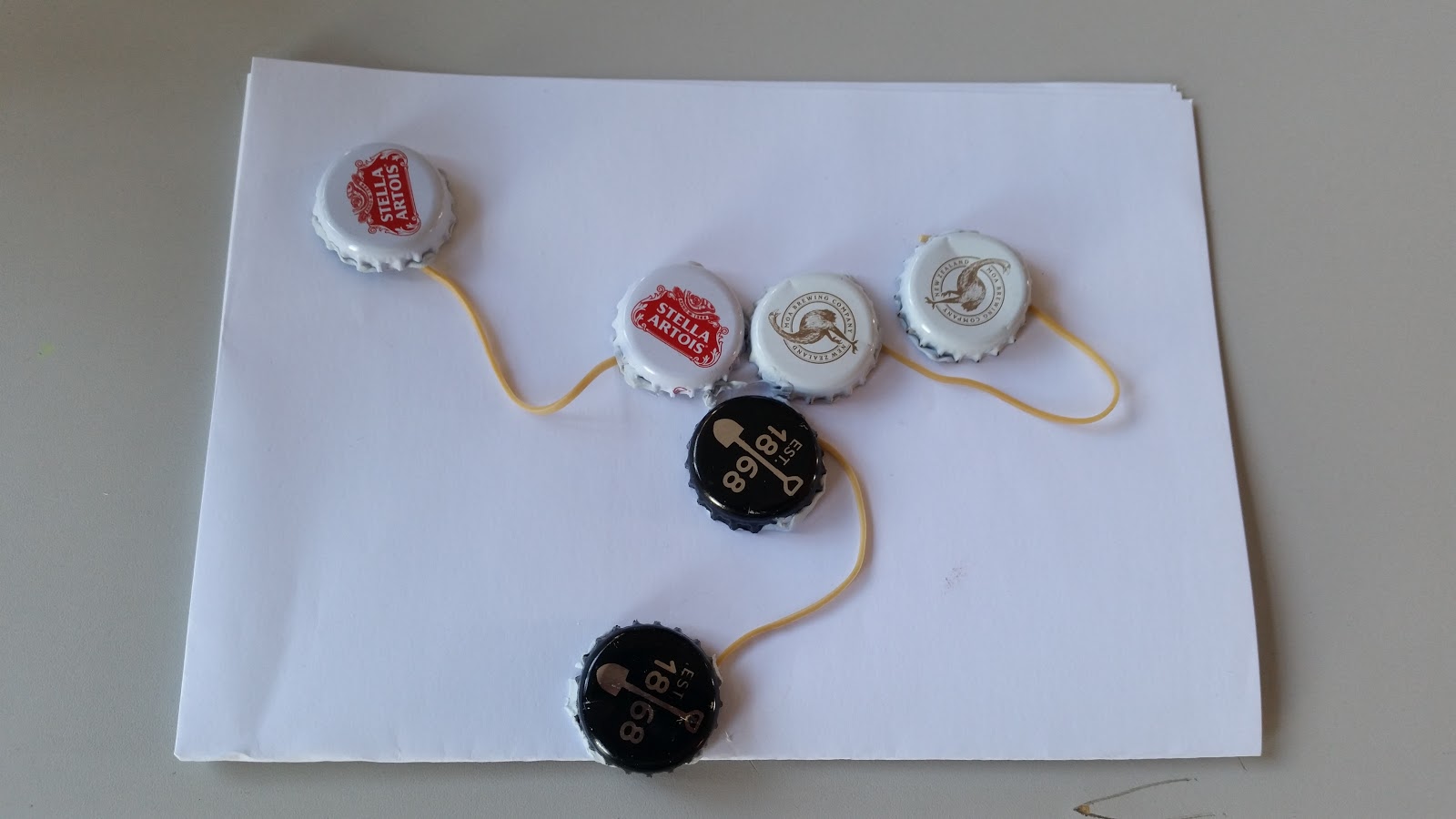
Prior to class we were all asked to bring some useless items and we used these for our final prototypes. My final idea involved my client connecting with another class member via Skype and working through the online class activities together. His home office could also have a visual board that had the due dates and deadlines to keep him focused.


My partner had also come up with something similar for me based on my needs and problems. The three bottle caps on the outside represented people connected together using the internet to do the online learning together. The paper represented the people also being the same physical location all together in the same learning space like a room or cafe etc as I like blended learning but also value the face-to-face time to discuss and reflect.


We also had a quick look at the idea of perception and sometimes you need to work through what you don’t want or need to find what exactly it is that you need or want. This is demonstrated in The Little Prince Book. When asked to draw a sheep it was never what the other person had envisioned until he drew a box and you could imagine the sheep inside the box.

Then we had a quick look at some resources for Design Thinking as there are many versions:
  • IDEO - Design Thinking for Educators - how to toolkit for educators
  • Notosh - Ewan MacIntosh’s book - how to come up with great ideas
  • Hasso Plattner - Redesigning the classroom experience
  • Eco innovators - Design Play Cards
We also looked at a video about Diffusion of Innovation Theory - The Adoption Curve. This talked about how we should market the use of digital tools differently to each of the the different kinds of adopters, early and late etc. It also discussed how important it was to cross the gap between the early trend setters and the majority.

This lead on to looking at the 7 Pillars of Dig Leadership from the Digital Leaders book by Eric Sheninger:
  • Communication
  • Public Relations
  • Branding
  • Student engagement/learning
  • Pro growth/development
  • Re-envisioning learning spaces and environments
  • Opportunity
The first three are very important and much like a business, a digital leader needs to be the brand leader. How can you…?
  • Communicate with your main stakeholders in real time? Which Tools?
  • Take control of public relations to spread positive news?
  • Establish a brand presence - your professional brand, your school’s brand or even your change initiative brand?
I guess I hadn’t really looked at it like that before but it makes sense. Teachers may or may not want to simply adopt new digital practices without understanding why and how and how others have already used it etc. Some examples of how we could communicate with our stakeholders like staff, students and caregivers could be via Facebook stories, app reminders, our LMS Schoology and the newsletter etc.

So some great ideas to reflect on and have inspired me to make changes to my digital leadership practice. For example I could communicating more effectively with the stakeholders involved, I will dive into these kinds of ideas as part of my first leadership assignment.

Monday, 22 January 2018

Education - Online and Distributed Leadership & Blended Learning


Week 7 - Online and Distributed Leadership & Blended Learning


The flipped learning for this week was to complete the 7 Step Twitter Challenge to become a more connected educator. The steps for newbies were to create an account, update your profile, follow some other tweeters like @nzMindLab, tweet, reply, find interests and explore. There were also some suggestions for people who already use Twitter such as participate in a Twitter chat event such as #edChatNZ. I am pretty much a novice when it comes to Twitter I basically use it as a place for professional learning and use Facebook for my personal connections with family and friends. So it kind of keeps my professional life a bit separate to my personal life. I use Twitter to read and upskill on tech and teaching ideas and follow some interesting people and organisations.

We were also asked to read an extract from James Spillane’s book ‘Distributed Leadership’ chapter 1 - How does my situation impact my leadership? One quote stood out for me ‘from a distributed perspective, leadership involves mortals as well as heroes. It involves the many and not just the few. It is about leadership practice, not simply roles and positions...leadership practice is about interactions, not just the actions of heroes.' This kind of leadership has been linked to improved engagement in teaching and learning.

We were also invited to complete a task using Edpuzzle.com. Basically a video had been prepared that talked about flipped classrooms and differentiation. The facilitator had added in extra narrative and questions to answer during the video at particular points. We were then asked if we had done this before, I myself have made videos before to use with students in class but not no much expected them to view them before the next lesson. It was a good reminder about using class time to apply and refine knowledge and teachers having more time to then to go around and give individual support as some prior learning has been done prior to the class.

I had completed the homework tasks and was ready to go for class. We started out with some discussion around Flipped vs Blended learning. Blended basically involves some online learning activities and some other traditional learning activities. Flipped is more about a subset of blended learning primarily focused on videos that have been created in advance for students to access. Videos are great for conceptual learning as a base and then in class time can be focused on more creative tasks as Salman from Khan explains in this video.

We discussed a number of tools that could be used for flipped and blended learning such as:
  • TEST Teach with Blendspace
  • TedED
  • EdPuzzle
  • Commonlit
  • PlayPosit
We then moved on to digital discussions and what tools we could use to facilitate discussions such as:
  • Todays Meet
  • Disqus
  • Blogs
  • G+
  • Twitter
We also checked out this video about leadership Distributed Leadership by Professor Alma Harris who discussed many of the pros and cons of distributed leadership which is definitely worth checking out.

We finished by looking at wicked problems and the NMC/CoSN Horizon Report for K12 which looks at the future of education, trends and technologies that will disrupt education and society. We were also asked if education is a wicked problem.

We had some great group discussions about the politics, multiple stakeholders, changing views, society, research, etc. Education is a very complex beast with many stakeholders, views, outcomes and systems in place. There is no silver bullet or ‘right way’ to ‘do’ education that would ensure it is beneficial for all stakeholders. It will probably continue be an awesome challenge for the stakeholders involved for many years to come and much like distributed leadership it is probably more about the interactions between the stakeholders than the actions taken. This has reminded me of one of my favourite whakatauki:

Unuhia te rito o te harakeke kei whea te kōmako e kō

Whakatairangitia rere ki uta rere ki tai

Ui mai koe ki ahau he aha te mea nui o te ao

Māku e kī atu he tangata, he tangata, he tangata!

Remove the heart of the flax bush and where will the kōmako sing?

Proclaim it to the land proclaim it to the sea

Ask me ‘What is the greatest thing in the world?’

I will reply, ‘It is people, people, people!’

So it’s currently the beginning of 2018 and our new school I guess is no longer so new as we are heading into our 3rd year of being open. I’m excited as it’s been a very crazy couple of years with loads of personal challenges and growth involved. I’ve also just realised how awesome and relevant it is that our focus for the first semester is whanaungatanga (relationships). I look forward to reconnecting with the staff and students and meeting the new staff and students. I'm also excited to continue the awesome journey that this AUT Mindlab course is taking me on. Woohoo for the first blog of 2018!!! Ka kite anō.

References

Spillane, J.P. (2006). Distributed Leadership. San Francisco, CA: Jossey-Bass.

Thursday, 21 December 2017

Education - Leadership Theories, Styles and Attributes & 3D Modelling and Printing


Week 6 - Leadership Theories, Styles and Attributes & 3D Modelling and Printing


This week the first homework task was to check out the video 'Leadership Theories and Styles', then identify a change initiative that I have been involved with. Apparently early on prior to the 50s leadership theories used to be focused on the person, then beyond the 50s it was more role focused and from the 70s onwards it has been more about the processes. The 7 leadership theories covered in the video were:
  • Transactional - exchanges between leader and followers
  • Transformational - engaged with motives and empowers followers, pays attention to professional development needs etc.
  • Pedagogical - NZ typical approaches to school leaderships, academic missions and promotes professional development
  • Distributed - shared and collective interactions and the situations define the leadership style
  • Servant/Agile - Sharing awareness, listening and empathising. Lots of styles involved. Unleashing talent of others.
  • Tū Rangatira - Common NZ approach in Te Kura schools, about innovation and vision. Leaders have a number of roles and a range of styles, and management different to leadership.
  • Situational - old theory, leader adapts to the maturity of the followers, direct if low maturity and then move more towards supporting and coaching.
One particular change initiative didn’t really spring to mind and I was not really too sure about some of the differences as the video only gave a very brief description of each so I was hoping the in class time helps with understanding these and I'd get some more ideas about how to apply this to my current school situation.

So I moved on to the next task which was to use a tutorial video to make a bag clip using Tinkercad and using a mouse did make it a bit easier to navigate. I had a go and did manage to make the bag clip as you can see. There were some great tips on the video about how to do this. Basically you used a bunch of different 3D shapes and joined them together with a few techniques to get the final outcome that could be 3D printed.


I was quite proud of my efforts and ready for class!

Week 6 - LEADERSHIP Theories, Styles and Attributes.


We started with a class challenge where a random picture would be displayed for 15 seconds and each person took one of the 15 seconds and would talk about how this related to leadership theories. Pechaflickr was used to display the images, you just put in the keyword like ‘leadership’ and the images appeared. It was pretty funny and challenging with everyone participating and coming up with something on the spot.

We then moved on to work in groups and were asked to pick one leadership theory. We chose to take a look at Situational Leadership. Basically this kind of effective leadership involves a logical understanding of the situation and an appropriate response, rather than a charismatic leader with a large group of dedicated followers (Graeff, 1997).

We then all took a quiz to check our style of leadership. So my results came back as the following:
  • Authoritarian 30
  • Procedural 35
  • Transformational 37
  • Participative 39
  • Laissez-Faire (Serviant) 37
I found it interesting that the weightings for me were pretty even, but maybe more of a leaning towards Participative, Transformational and Liassez-Faire type of leadership. So we then had a look at the chart about the different styles that were summarised and it was interesting to look at the types of control involved. Basically the ones most like my style had medium to low amount of control required. This makes sense as I like to involve others, participate, consult, reason and be helpful rather than control or tell people what to do. However, as a parent and teacher at times like when it comes to safety or resource management etc I will direct in an attempt to control the situation. Although, I’m also a fan of letting things run it's course and natural consequences and also sharing the reasoning behind any directives given. So in the end this website gave a good summary of these kinds of leadership and a great place to start reflecting on personal leadership and followership.

We also had a quick look at a video about EQ and Goleman’s styles and attributes of leadership. Emotional skills were considered to be two times more important than technical skills. The five areas that make up emotional intelligence are:
  • Self awareness
  • Self regulation
  • Motivation
  • Empathy
  • Social skills
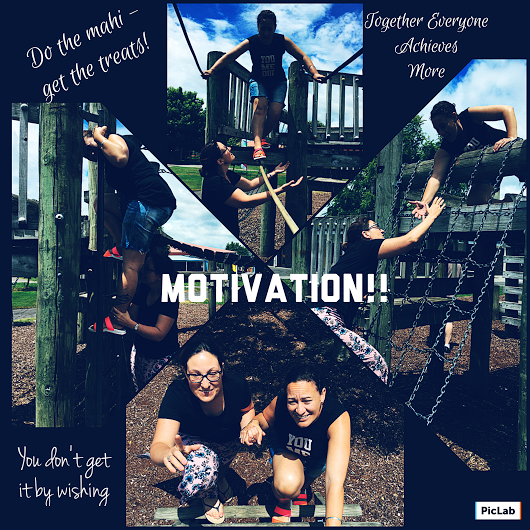
In groups we were challenged to make an image that focused on one of these areas and we picked ‘motivation’. We used the piclab app on a phone to make this great image made up of pictures we took and text we added.


It was also interesting to find out that Google also freely share their New Manager Training Guide, which includes some important aspects of emotional intelligence and a growth mindset that social skills can be taught etc. Also a great video about empathy and sympathy worth checking out from Dr Brené Brown. A great message about sympathy vs empathy. Having sympathy means you look into a situation, and empathy is a vulnerable choice to connect and sit with people rather than trying to fix it. I really like this analogy.

Week 6 DIGITAL - 3D Modelling and Printing


We then moved on to looking at aspects of 3D modelling and printing. We talked about issues like not having the resources like the printers and the time it takes to print things which can be difficult to manage in the classroom. The facilitator pointed out that she had outsourced some printing like earrings she had designed. I had not really thought about this as an option but I guess this is worth looking into further. Maybe we can send off our models to get printed somewhere else rather than purchase and maintain printers ourselves - a great idea!
We then had a go with SculptGL we started with a sphere of clay and started to make an animal then we all swapped seats and worked on someone else's and this how mine ended up looking. It was a simple idea to swap seats but very powerful. I felt pressure to try hard to make it work on someone else's sculpture and it was great to let go of control and see what others were able to come up with.


We then went back to Tinkercad and had a go at creating a Christmas decoration which was fun and frustrating at the same time. These tools were a great way to develop our spatial skills, creativity, and measurement to name a few. There is also research that states “strong spatial thinking, a skill necessary for creating three dimensional objects, is directly linked to success in science, technology, engineering and mathematics...spatial thinking can be taught and improved through practice.” (Karon, 2015). 

This is the last class as we head into to a break for Christmas and I'm really looking forward to unplugging, getting off the grid, and going camping with my family. My next blog will be in the new year so please take care, have fun, merry Christmas and all that jazz, I'll catch you on the flip side!

References

Graeff, C. L. (1997). Evolution of situational leadership theory: A critical review. The Leadership Quarterly, 8 (2), 153 - 170. doi:10.1016/S1048 - 9843(97)90014 - X

Karon, P. (2015). Teaching 3D Modeling to Children. CG Cookie. Retrieved from https://cgcookie.com/2015/05/29/teaching-3d-modeling-children/

Education - Growth Mindset and Computational Thinking

Week 5 - Developing a Growth Mindset and Computational Thinking

For homework this week we were asked to take a quiz about our mindset. I’ve come across Carol Dweck’s ideas about ‘Growth Mindset’ before and how much this kind of outlook and related beliefs can help us as learners. So I wondered how I might score at this point in my life? Well, turns out I’ve taken on board a lot or already had quite a growth mindset as I came out with 0 fixed and 8 growth.

However, I think that often despite logically believing these ideas, at times I don’t always naturally have this view of myself or others. I have habits of negative self talk like ‘I can’t do this’ or ‘I’m not good enough’ when things get tough. But I guess, the first step is being aware of this and then taking action to not ‘get sucked in’ and limited by this initial reaction. I also have often thought about this from a learner point of view and not really from a leadership point of view. If anything basically can be ‘learnt’ why do we sometimes get so fixated on particular people or personality traits making good leaders, which is a very 'fixed' outlook. Surely these skills can be learnt with the right supports and motivations in place?

Another task was to try out a citation app and I had a go at https://www.mendeley.com which is cloud based so I thought it would be quite flexible and seems to be going OK so far as I’ve managed to add references into the library without too much fuss and also use them.

The last item of homework was to watch a youtube clip entitled The Poetry of Programming. Linda Liukas has some great ideas and developed an awesome book called Hello Ruby which helps kids develop programming skills through story telling. It is very encouraging for girls to get into coding and breaks the stereotypes of coding not just being for nerdy boys. I love her ideas about disruption starting with a vision and that code is the next universal language.

I myself have been breaking stereotypes ever since I left school by working in the male dominated IT industry and not working with many other women. I then did the opposite when I started work as a teacher in all girls schools up until my current job I have now. My entire digital classes used to be full of girls, and now every time I get a new class list for the digital classes one of the first things I do is look down the list and count the girls. Sadly each time the number of boys always majorly out numbers the girls. So still the stereotypes exists, and I will continue to make it my mission to make coding and computer science fun and engaging for all students and I will continue to challenge beliefs and ideas around fixed mindsets.

DIGITAL - Computational Thinking


So I arrived at class excited about the weeks topics as these are right up my alley. I’ve been following the development of the new Digital Technologies curriculum which is currently in draft and will be available for use next year. You should totally check it out if you are not familiar with it. It is a great step in the right direction for key technology development skills such as computational thinking to be taught to children as soon as they arrive at school rather than later on. It makes sense for kids to be exposed to these ideas early on in life, to be creators rather than consumers. However, resourcing and up skilling of teachers etc will be a mission for most schools and is a whole other issue.

We started class this week by pairing up and doing a ‘guess the number between 1 and 100’ game by asking each other questions. It is basically common sense to ask questions like is it less than or greater than etc to narrow down the number. This can then be easily programmed so a computer can play the game and can be made even more effective by changing the strategy slightly which essentially is computational thinking and algorithms in use. Someone in class mentioned that maybe it’s just the fact that the technical terms put people off a bit. Basically algorithms and computational thinking is about problem solving but the terms can freak people out. I have found students have come across algorithms in math classes but basically a knitting pattern, a recipe or instructions to fold a paper plane are all algorithms and we all use computational thinking but just don’t realise it. I watched a really great documentary a while back, you should check it out too it's all about algorithms if you are interested it was called The Secret Rules of Modern Living - Algorithms.

We then were given the challenge of writing some instructions to program a person like a robot to move around the room without bumping into things. Since both of us had coding backgrounds we wrote some initial instructions that looked quite ‘codey’ with while loops, conditions and degrees etc. Then reflecting on this we thought we should rewrite the instructions so they would make sense to anyone as someone else in the class was going to carry them out. So here are our two versions of instructions below. Other groups made quite lengthy accounts which were a lot like a treasure hunt, so many steps left/forward etc. In comparison we just went to a slightly different version which which could be argued was a little more efficient with less instructions needed due to a loop and conditional check. Algorithm efficiency is a whole other lesson in itself. So I guess this was our experience of coding kicking in which helped or hindered initially as we were programming humans not computers. But either way we all found a solution to the challenge in our own ways and all learnt something along the journey.


Another great video about getting started with coding and is inspiring is from Mitch Resnick.

LEADERSHIP - Growth Mindset


We had a look at the backwards bike video, where a man learnt how to ride a bike where the handlebars worked in the opposite directions. Even though we might know this is the case our brain can’t adjust and doesn’t understand how to ride the bike initially. This in some ways proves that knowing things doesn’t necessarily mean we understand things. It’s hard to change rigid entrenched thinking. If we apply it to understanding a growth mindset we might logically understand this but how do we put it into action to demonstrate our understanding? It is not always that simple.

There were some statistics given Diehl, E. (2013) about managers that had a fixed or a growth mindset. Basically there might have been short term gains with managers that had fixed mindsets but that long term the organisations had greater success with a manager that had a growth mindset.

Diehl, E. (2013) also found that growth-minded leadership involves:

- Validating and addressing staff fears and barriers
- Communicating the vision explicitly
- Providing support to those who lack knowledge or skills
- Creating opportunities to share research and information
- Allowing everyone access to growth opportunities
- Sharing the workload among all staff

Basically we should be concerned with our own personal growth and how we can support others to do the same, which in turn then lifts the whole organisation.

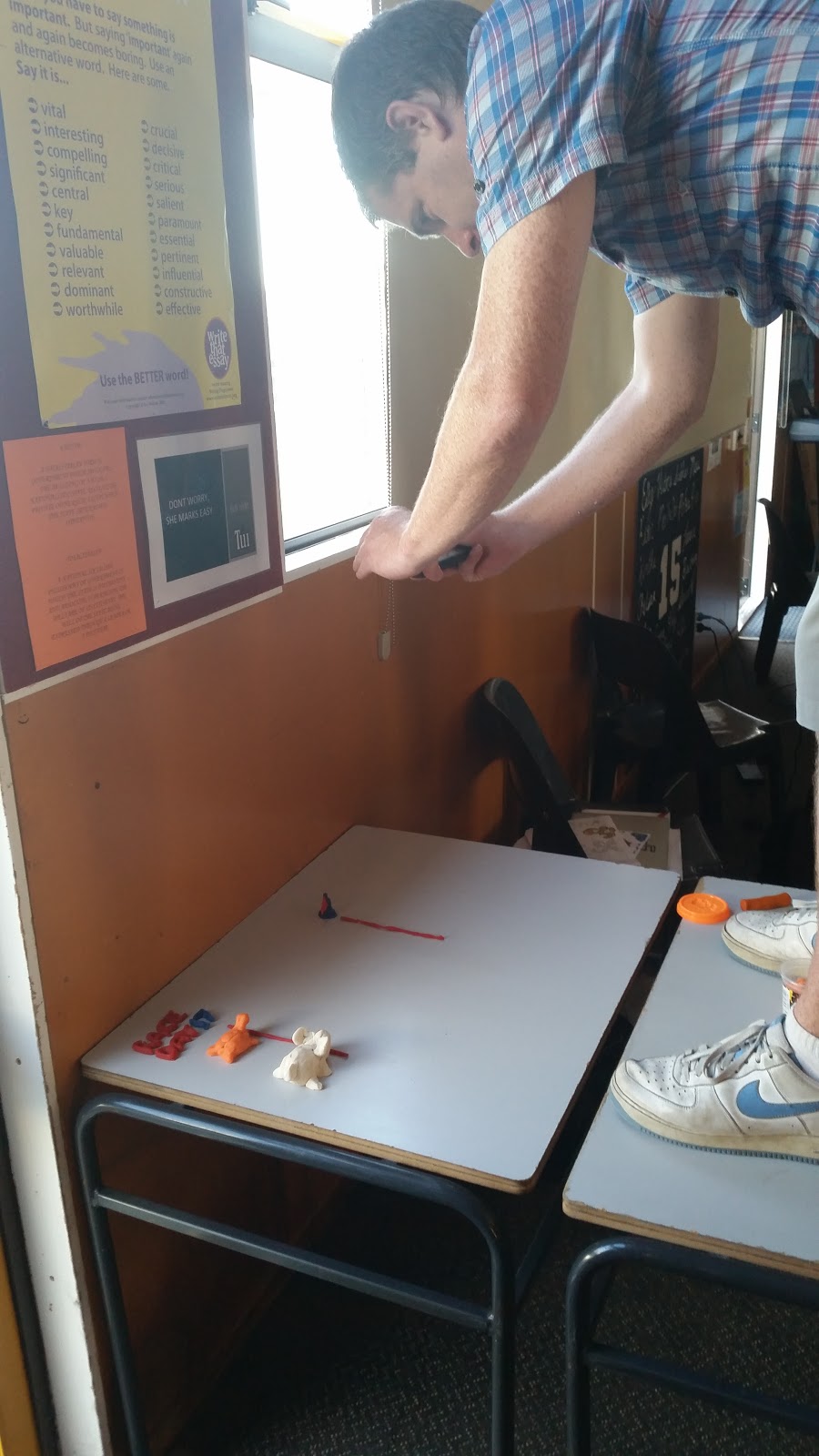
We were challenged to work in groups to create a stop motion to bust a myth related to a ‘fixed’ mindset. We discussed the idea of the tortoise and the hare race story which originally was about the hare being cocky and thinking it would easily beat a tortoise but he fell asleep and the tortoise won by being slow and steady. We did a version where the tortoise had a ‘growth’ mindset and trained and lifted weights etc then when it came to race day the tortoise beat the hare, so changing the narrative. The moral this time being that with a growth mindset, hard work and effort we can achieve great things. We had fun making this stop motion video, which somehow ended up with some interesting shots from on top of a table.

Another great session at Mindlab!


References
Diehl, E. (2013). Leading Change with a Growth Mindset. Community.mindsetworks.com. Retrieved from http://community.mindsetworks.com/blog-page/home-blogs/entry/leading-change-with-a-growth-mindset

Friday, 8 December 2017

Education - Research informed Leadership & Learning Theories


Week 4 - Research Informed Leadership & Learning Theories


So to be completely honest I didn’t do the prior readings and video watching that I should have done before the week 4 class. I don't even have a very good excuse, just that it’s been really hectic with a lot going on at the moment at work and with our family being the end of the school year. So I basically did the class and then after class caught up on the reading and video that I should have done prior to class, oh well I got there in the end.

LEADERSHIP - Research Informed Leadership
We had a quick discussion about the reading from Benseman, J. (2013) - Research-Informed Teaching of Adults: A Worthy Alternative to Old Habits and Hearsay? Now that I’ve gone back and actually read this I’ve come up with this summary of some key points:

  • Research found a gap in teachers philosophies and their practices like student-centered vs teacher-centered, what they believed and what they did was often quite different.
  • We tend to default to teaching as we have been taught much like our parenting I guess.
  • Teachers tend to rely on experience vs research findings
  • We could use research based on effective teaching but who decides what effective looks like and what is the criteria?
  • We could use learners evaluation of learning success and experiences but this has limits, learning might occur and be uncomfortable and in turn skewing ratings
  • We could use peer teachers who are perceived to be effective by peers, but might not match relevant research and again who decides who is an effective peer teacher and how?
  • We could use research-informed teaching/practice based on trials and quantitative and qualitative information. But what about quality of this? For example debate about learning styles - some research argues it is good to utilise learners strengths and preferences however, other research argues that it is not helpful due to labelling and a fixed mindset and what about the value of developing the weaker learning styles etc. 
So I think in the end the article acknowledged that teaching is complex, there are so many varying factors and maybe it’s more like an art and a science put together or craft we are refining. We can’t always scientifically nail down the factors of success teaching practice and a certain amount of x-factor that can't be qualified or quantified. Using research informed practices is however most likely to be a step in the right direction.

This made me think about things I’ve come to personally believe (my confirmation bias lol) that teaching is much like parenting, everyone is entitled to their personal opinion about what action or strategy they would use for a particular situation which may be research based or based on experience. Also that we can’t always predict how it will pan out for that particular situation and we don’t know if it was effective until after we have tried it. However, what’s probably most important is that we can reflect on what the outcome appears to be for that child and it if helped or hindered them. However, so much is debatable and there are so many variables and maybe a completely different strategy might have had the same effect. Also from a teaching context rather than our own beliefs guiding our actions as teachers, as professionals we must take action from the basis of the values, beliefs, vision and policies that the school has put in place. Luckily for me these school policies and beliefs usually fit really well with my own personal beliefs.

Is it more about the way in which we are reflective in taking action to try to improve the lives of our children that is most important? In a school environment we together as teachers, learners and the community whanau must decide what we think is best for the learners. Therefore maybe it is best to spend time truly trying to understand the impact we are having in order to make changes if needed. So anyway I think I’m blahing on too much and heading off track and will come back to the idea of how we might use research to inform our practice.

This lead onto to us watching a really old video based on Dr Foxes Lecture Experiment where a person was giving a lecture about some scientific research however, the content was completely made up and he was actually an actor who learnt the speech a few days before as discussed by Naftulin, D.H., Ware Jr, J.E. & Donnelly, F.A. (1973). They wanted to see if people would believe him and if they could pull it off. They found that in fact people did believe him and it was very convincing. By using particular language techniques like double talk etc he was able to pull it off.

So this leads to some questions about ourselves as educators and about validity of research and what is relevant knowledge? How might we be mislead at times? I often wonder about research in that just about anything can be justified if you conduct research in a particular way looking to confirm suspicions or ideas. How can we know that research is conducted in an ethical and unbiased manner and takes in all relevant variables - I think these aspects can always be debated. I think much like infomercials with dodgy phrases and statistics and claims we must be critical thinkers in whatever we do. There are always competing agendas at play and each person or group involved might be inclined to lean towards confirmation bias, it is a natural response to claims. We compare these claims to our own current beliefs and we tend to want to confirm and strengthen our current beliefs at the cost of being more open minded and open to multiple perspectives and broader thinking.

Again I think the success or usefulness of research comes back to how we use it and the impact of the action taken because of the research. We are running our own trials and research each day in class, we take action and try things out for ourselves in our particular situations as teachers so we can then make a call about its effectiveness. We discuss with others including the learners and co-teachers and other teachers gaining multiple perspectives about how things went, how it might have been helpful or not and work on the next steps together. It is not always easy to acknowledge all the competing ideas, outcomes, agendas and beliefs and perspectives. This is what I’ve found both awesome and challenging in our school environment. It is so awesome to be able to discuss situations with co-teachers and people from varying backgrounds who are right there with you in the thick of it.

I’m in a hapu made up of six advisory teachers and each of their 20ish students so all 100 plus people sharing a learning space together. This is a big group to deal with and the sense of community and whanau is awesome. Working as six co-teachers with one as a hapu leader and sharing an office can also be very challenging as you could imagine. However, I’m lucky in that the teachers in our hapu group are a great bunch of individuals and what holds us together is that we are all supportive, have a great sense of humour, enjoy a robust debate and care deeply about the learners and the teachers. This kind of teaching and learning structure supports us and encourages us to effectively co-teach and refine our practice. We are often reflecting on our practices with robust and effective discussions that happen in real time and we are all truely interdependent in our roles.

I have not been involved in this kind of teaching environment before, everything is so transparent, shared, relevant and immediate which is awesome from an informed teacher practice point of view when things are going well with the teams. On the flip side I also find this quite draining as everything is so open and vast, there is so much contact with people and we only really have glass separations between different areas or rooms.  I do find it hard at times to have a quiet private moment to think and reflect so I must try to balance this out in my broader life outside of school. Ultimately I am a sensitive introvert that needs some quiet time to myself to process life and experiences. There are also many learners in our classes who also feel the same way in this fast paced shared environment so we as a hapu have tried to find ways to unplug and relax with meditation and mindfulness as part of our classes which has been much appreciated by all.

I'm surprised at how much I've actually enjoyed this process of writing this blog. I don't think it really matters about who reads it (bit long and boring really and could be more of a personal 'you had to be there' thing). However, that said I think for me the benefit has been that it is a great way for me to organise my thoughts and I can come back to them when needed.  So anyway if you are still reading this, I know it has been pretty long winded, you’ll probably be happy that I’ll now move on to the Digital part of the class.

DIGITAL - Collaborative, Constructionist and Constructivist Learning

With the more boring stuff out of the way we moved on to a fun practical challenge. We worked in groups to make a digital musical instrument using Makey Makey’s. These are basically electronic kits that you can use to make nearly anything connect and interact with a computer. I have already been using these in my classes and have found that students love using them and they can be quite creative. 

I was in a team with another work colleague who has also used them before and was actually currently teaching a module that was basically the same context of making musical instruments. The other two members had not used them before. So my colleague and I sat back and let the other two take charge to gain the practical experience of working it out and just jumped in to help with problem solving when needed. We basically created a keyboard from felts wrapped in tinfoil and programmed them to play a note using Scratch. This is one of the most common programming environments used to teach computer coding and is really fun!


The two teachers new to the Makey Makeys did really well and enjoyed the experience. We were all very proud of our keyboard and it worked really well.

We then reflected on the task by checking out some learning philosophies such as constructionist and constructivist learning. I was pretty lost about the difference between these ideas at this point and wished I had actually watched the video prior to the class as instructed - doh. We had to work in our teams to reflect on the musical instrument activity and some of the aspects of collaboration, and constructionist and constructivist learning involved. So I bumbled through and did a quick bit of Googling and had some discussions with the others to help with creating a basic presentation. We then took a screencast of us delivering the presentation and we each took turns at reading a part of it. For being quite rushed I think we did a great job. 


Now that I’ve gone back to have another look into these learning theories I think the key message from the day was that there are a couple of particularly relevant ones when it comes to using digital technologies in the classroom which are constructionism and constructivism.

Constructionism is basically about learners constructing most of what they learn or understand and is process which might include using prior knowledge and using new knowledge to construct or transform knowledge. Constructivism is like a subset of constructionism where the learner actually ‘produces’ something as part of constructing knowledge like a robot or an instrument in this case. It is essentially ‘learning through doing’ which I guess is also the basis of the ‘maker’ culture that is gaining a come back. Who doesn’t like tinkering with stuff, that is what I loved about hanging out with my dad in the garage and all his interesting bits and pieces we used to make stuff. I love making things in my classes, I love tactile learning and have found these kinds of approaches are much appreciated by many students.

One last thing we were asked to do was to go back and check out the collaboration ITL rubrics to see if the instrument activity encouraged a high level of collaboration and I believe it meet all the criteria of the highest level 5. We all had shared responsibilities as some of us helped with coding and others made the instrument and we made big decisions together about the kind of instrument and how it would be coded. We needed each other to contribute and play a part in order to be successful in our learning so meet the highest level 5 of the ITL Collaboration criteria as follows:
  • Students DO have shared responsibility 
  • AND they DO make substantive decisions together about the content, process, or product of their work 
  • AND their work is interdependent.
So I guess if we are to use research and learning theories to improve our teaching practices these theories and ideas are great places to start.

References

Benseman, J. (2013). Research-Informed Teaching of Adults: A Worthy Alternative to Old Habits and Hearsay?. Unitec ePress. Number 2. Retrieved from http://www.unitec.ac.nz/epress/index.php/research-informed-teaching-of-adults-a-worthy-alternative-to-old-habits-and-hearsay/

The Dr Fox Lecture experiment - (Naftulin, D.H., Ware Jr, J.E. & Donnelly, F.A. (1973). The Doctor Fox Lecture: a paradigm of educational seduction. Academic Medicine, 48(7), 630-5. Retrieved from http://pdfs.journals.lww.com/academicmedicine/1973/07000/The_Doctor_Fox_Lecture__a_paradigm_of_educational.3.pdf)

ITL Research. (2012). 21CLD Learning Activity Rubrics. Retrieved from https://education.microsoft.com/GetTrained/ITL-Research

Wednesday, 6 December 2017

Education - Digital Disruption & Implementing Technology...

Week 3 Flipped Learning (Homework)


Okay so I’m back for blog post number three - yeehaa! It has been a really fun week, so for homework we started by assembling Google Cardboard headsets. Once you are done you place your phone into the headset and it turns into a low cost virtual reality headset. You can check it out at https://vr.google.com/cardboard/. We were also asked to install the following apps onto our mobile devices - Aurasma, Quiver, Expeditions and Google Translate. If we had an Android device, we also needed to download Anatomy 4D and Elements 4D. I have had a tinker with this cardboard VR before but but had not used many apps so was excited to have another look into the possibilities.


We also read an article ‘Conditions for classroom technology innovations’ and it included some interesting stories about digital innovations that teachers tried to implement and how successfully or not so successfully they were implemented. Basically they came up with 11 key factors grouped into 3 areas which had an impact on the success of the technology innovations. The three key areas included:


  • The innovator (teacher) - their technological knowledge, how the tech fit with the teacher pedagogy, and knowledge of the school's social environment and organisational structure.
  • The innovation (project) - how much of a shift the innovation was from the current school culture, teachers current practice and current resources.
  • The context (school) - which included the technological infrastructure, human infrastructure (support staff, policies and processes etc) and the organisational culture.


I think in the end it was pretty much common sense (although a good friend of mine once said “well common sense is not so common actually”). Basically a strong teacher had the biggest impact on success, small incremental independent steps and quick wins worked well and social support was also needed.  I think that was the gist of the article in the end. So armed with my Google Cardboard I was ready for our classroom session (apart from the magnet button thing not working properly which totally bugged me).


Leadership - Implementing Technology Innovation - In Class Time

We launched straight into looking at two models that help teachers implement technological innovations in the classroom - SAMR and TPACK. Well, I was already familiar with SAMR but had not heard of TPACK before so this was great and I was keen to find out more about this.

SAMR was developed by Ruben Puentedura and includes 4 ways to integrate technology in your learning activities. You can check SAMR out on the TKI website. Mark Anderson has created a version of SAMR that shifts the focus slightly to teachers confidence. These tools help teachers to design learning tasks that significantly transform the learning experience.

TPACK (Technological Pedagogical Content Knowledge) was developed by Punya Mishra and Matthew Koehler and identifies the knowledge teachers need to be able to teach effectively with technology. I would like to look into using TPACK so that I can compare this with SAMR, so it’s on my list of things to do (which to be fair is quite long). I would like to use this in an upcoming assignment so will see how that goes.
We then moved on to looking at Google Tour Builder which is super awesome. You can create virtual trips around the world using Google maps and add images, text and notes etc to each location. Our facilitator used this to share her whakapapa as a kind of Mihimihi/Pepeha which I thought was an awesome idea. I would really love to create something similar for myself personally and use as an introduction of myself to students at the beginning of new classes and encourage students to do the same.

We were then asked to form groups and create an activity that could be used to create an activity we could use with our students. I ended up in a group creating a resource with two other work colleagues from our Junior High School that we could use at the beginning of next year. Basically in teams students could map out a tour of all the school trips they were going on like their camp and other service days and whanau development trips etc. We could go nuts using drone footage, assign student roles within the teams like editor, photographer, tech leads, etc. The tours could then be shared with the school community and caregivers and could evolve in real time if students had access to the internet. This was an example of a tour we started. We got pretty excited about our ideas and we worked really well as a team.

Looking back we did not actually use SAMR or TPACK to plan and evaluate our learning task - doh missed the boat on that one. So after a quick think about in retrospect, I think we pretty much did manage to plan an in-depth rich learning task and used the tech effectively and it would probably be at the highest level of ‘Redefinition’. Basically we were able to redefine the idea of a journal or diary of a trip by linking to a virtual map and add multimedia which totally transforms this idea and allows options for students to engage with the idea and wouldn’t be possible without using something like Tour Builder (unless someone would like to disagree?). Turns out that for homework what we are going to do involves going back to the planned activities we shared and evaluate these using these tools so its all good.

We also had a quick discussion about the article we read for homework and basically discussed the ‘messiness’ of trying to implement tech. I myself have had some epic fails and some awesome wins with tech in the classroom and I guess I personally always fall back on preparing, being organised and testing things out as much as possible but at the same time being flexible and calm when things don’t go so well which can often be the case. I’m usually pretty upfront with the students and involve students, they often have great ideas and love working things out together. We basically keep calm and carry on with problem solving, have a laugh or even quite happily abandon ship if needed and try something else if things are not salvageable. It is all basically a learning process and messy much like many IT jobs I’ve had in the past. It’s hardly ever smooth sailing and I’m all for a bit of real world learning and sharing of mistakes, problems and solutions.

Digital - Technology Disruption and Mixed Reality - In Class Time


Image Attribution: Evan-Amos - Own work Public Domain

For this part of the class we had a really fun time exploring Virtual Reality and Augmented Reality. We first had a go with Google Expeditions which was awesome! You can be the tour guide or the person taking a tour and you start the tour on your phone and then pop the phone into the cardboard headset and take a look around, you are immersed in the place as if you are actually there. We took a tour around the Great wall of China and trip under the sea, it was really fun!

We also had a go with Aurasma and created a cartoon drawing of ourselves and when you placed the phone over the image this triggered the information you wanted to pop up on the phone. We took a short vid of ourselves and when someone placed their phone over the drawn image the video would pop up on their phone. This was also super fun. I can imagine how students could use posters up on the wall around the school or handouts to find the hidden info. They could create these quickly and easily, I could see students very engaged in these kinds of missions.

Another awesome tool was Quiver, basically you start by printing out some colouring pages and colour them in. I had a volcano diagram and coloured it in. Then when you put the phone over this it would register the drawing and it would pop out in 3D with the colours you have drawn and you can inspect the volcano and show and hide different parts in 3D. It was very cool!

Something similar was Elements 4D and Anatomy 4D these were printed sheets and when you held the phone over the printed image a virtual image popped out in 3D and also moved so was 4D like a person’s real heart was pumping and could be inspected. You could turn it around and look at different parts zooming in and out - super rad!

So we definitely all had some serious fun and I felt really inspired after this session. The sessions always go so fast. For a late night after school on a weekday from 4pm to 8pm it has been awesome to to be so inspired and so totally worth the effort - if there were only more hours in a day to implement these great ideas.


References

Zhao, Y., Pugh, K., Sheldon, S. & Byers, J. (2002). Conditions for classroom technology innovations. Teachers College Record, 104(3), 482-515. Retrieved from https://www.rtsd.org/cms/lib/PA01000218/Centricity/Domain/96/Conditions%20for%20Classroom%20Tech.pdf

Week 32 - Reflective Practice

Week 32 - Reflective Practice The last mission to wrap up my personal 32 week journey is to reflect and critically evaluate one key chang...