Showing posts with label Professional Learning. Show all posts

Monday, 9 July 2018

Week 32 - Reflective Practice

Week 32 - Reflective Practice


The last mission to wrap up my personal 32 week journey is to reflect and critically evaluate one key change in my own professional practice and share my plans and dreams for my future professional development or practice. I will use the reflective model from Rolfe et al. (2001). Sorry but I also found it hard to stick to the 400-600 word limit on this one.

Step 1 - What? One key change in my professional practice.


One key change in my practice has been the mission to more effectively implement personalised learning in the hope that this would encourage students to be more authentically engaged in deep learning.

Personalised learning is one of the 13 key future education concepts identified by the Hack Education project. This theme also fits well with the teaching code of standards value whanaungatanga. Which is defined as engaging in positive and collaborative relationships with our learners, their families and whanau, our colleagues and the wider community, Ministry of Education (2017).

Step 2 - Now what? Evaluate the identified change.


I will use Osterman and Kottkamp’s (2015, p.70) reflective model to evaluate the change to more effectively personalise learning.

Stage 1 - Identify the problem. In this case the problem I’ve found is that my students often seemed to be engaged with their learning at quite a surface level and are often not very able to articulate their learning and next steps. So I wonder how I could support them more effectively develop their learner agency and understanding of what and how they learn. I thought that exploring personalised learning might be a good strategy to help me achieve this goal.

Stage 2 - Observation and Analysis using data and insights to drive the change.
I conducted an investigation into personalised learning and have found that despite a lack of research done in this area personalised learning is an approach which through its implementation provides learners opportunities to develop their self-regulation, and maturity to drive their own learning thus teachers can empower learners to develop the skills required to develop their own learner agency and reach their potential and learning goals, Hargreaves, D. H. (2006).

From a Māori world view I found that the notion of Māori determining their own futures also fits well within the definition of personalised learning. Tino Rangatiratanga, the self-determination principle encompasses learner agency and engagement through meaningful control over one’s own life and cultural well-being which is also embedded in our Treaty of Waitangi, Katoa Ltd, (n.d.).

Stage 3 - Abstract re conceptualisation. What new learning, research or perspectives are relevant to consider for implementing change?

France, P. E. (2018) argues that sometimes our interpretation and and understanding of personalised learning falls short by putting student in front of devices to work at their own pace, but, this is actually depersonalising the learning. He also argues that gamification measures and encourages the results we want to see even if students are not really learning. One study was mentioned that found this kind of approach only had about 3% gains in math and none in reading. Hattie was also quoted with minimal gains from individualisation (0.23 effect size) and web based learning (0.18 effect size).

Stage 4 - Active Experimentation. We have to be careful that we are not using technology to isolate our children by over individualising their learning. We must make sure we are giving students time to collaborate and connect with one another. France presents 4 key questions we must ask ourselves as teachers when personalising learning through the use of technology:
  1. Does the technology help to minimize complexity?
  2. Does the technology help to maximize the individual power and potential of all learners in the room?
  3. Will the technology help us to do something previously unimaginable?
  4. Will the technology preserve or enhance human connection in the classroom?
I will continue to gain a deeper understanding of personalisation and use these questions to ensure I am using technology in the classroom more effectively.

Step 3 - What Next? My future plans for future professional development and practice.


I’ve learnt and gained so much from this Mindlab experience both professionally and personally. I have pushed myself outside my comfort zone on so many levels. I have reflected and taken action in many areas of my leadership and teaching roles, and enjoyed sharing this journey with colleagues. I have also truly valued the support and collaboration with other teachers on the course.

There are so many areas I could now dive into such as being more culturally responsive and looking further into how we can more effectively create and sustain learner centred pedagogy. I started a personal blog and I have also started to blog on behalf of my school to educate and connect with our community about digital citizenship. I hope to continue to build on this blogging and include our students and school practices more, in order to build and strengthen this partnership with our whanau and wider community.

Although it is the end of the Mindlab postgrad journey for me for now, it is just the beginning of many more opportunities for professional and personal development. I have found this process challenging and through this I have developed confidence and become more skilled and knowledgeable in making changes to enhance my teaching practice. I feel I am now much better equipped to undertake my current roles as a leader and teacher and have improved my practice considerably and am keen to continue. Thanks to the Mindlab team and my awesome colleagues -couldn't have done it without you all!

Mai i te Kōpae ki te Urupa, tātou ako tonu ai.
From the cradle to the grave we are forever learning.

References
France, P. E. (2018). Retrieved from Why Are We Still Personalizing Learning If It’s Not Personal? https://www.edsurge.com/news/2018-07-02-why-are-we-still-personalizing-learning-if-it-s-not-personal?utm_content=buffer55e24&utm_medium=social&utm_source=twitter.com&utm_campaign=EdSurgeBuffer

Hargreaves, D. H. (2006). A new shape for schooling. London: Specialist Schools and Academies Trust.

Ministry of Education (2017). Our code, our standards. Retrieved from https://educationcouncil.org.nz/content/our-code-our-standards

Osterman, K. & Kottkamp, R.(1993). Reflective Practice for Educators.California.Corwin Press, Inc. Retrieved from http://www.itslifejimbutn otasweknowit.org.uk/files

Rolfe et al. (2001). Reflective Model. Retrieved from https://my.cumbria.ac.uk/media/MyCumbria/Documents/ReflectiveModelRolfe.pdf

The Mind Lab by Unitec. Hack Education. Retrieved from https://hackeducation.co.nz/

Saturday, 30 June 2018

Week 30 - Trends Influencing NZ or Internationally


Week 30 - Trends Influencing NZ or Internationally
This weeks mission is to look at trends influencing NZ or Internationally that is relevant to my practice. I will be using a reflective model from Rolfe et al. (2001).

Step 1 - What?

I conducted some research into trends and feel like I already have a good handle on many of them as I am a digital technologies specialist that tries hard to use applied learning, support computational thinking, and creative inquiry etc. However when watching the video from New Media Consortium (2017) ‘wicked problems’ were mentioned and this captured my attention as I have not explicitly been focused on these and am unsure about how these might impact my current teaching and learning in the classroom. Have I really been using authentic and complex contexts based on wicked problems?

Step 2 - So What?
I went on to have a closer look into wicked problems and in the NMC/CoSN Horizon Report (2017) I have found some definitions of problems ranging from solvable challenges that we both understand and know how to solve; difficult challenges that are more or less well understood but for which solutions remain elusive; and wicked challenges, the most difficult, which are complex to even define.

So if these problems are complex to even define how do we help students develop the skills and knowledge to deal with these? What is required to successfully consider these in our daily teaching and learning? I found some suggestions and useful information on a Forum from the Ministry of Education Enabling E-Learning website suggest they are difficult because they involve:
  • incomplete or contradictory knowledge
  • the number of people and opinions involved
  • the large economic burden
  • interconnected nature of these problems with other problems

Some tips from the website include making sure we look at the potential behaviours that are linked to social problems, and identify what behaviours/action we want to endeavor to change. Also that we can break down the problem, into more a manageable ‘project size’ where students work in teams to collaboratively address elements of real world issues. Also in our NZ context it might be appropriate to include a whole-system perspective that requires us all to be invested and respectfully integrates Māori understandings of our natural world. So some good ideas from here that I could implement.

Step 3 - Now What?
In my teaching I could probably make sure I start with more socially fuelled and value ladened topics and then break down these real world problems into smaller ones that can be tackled by our students. For example next semester I am part of a learning module that integrates Digital Technology with Physical Education and Health. We could look at the positive and negative impacts of technology on our hauora (health and wellbeing) and the impact of hauora on our technological advances. We can look into how we can more explicitly incorporate these kinds of wicked problems into our teaching contexts.

References
Source: Daggett, B. (2014). Addressing Current and Future Challenges in Education. Retrieved from http://www.leadered.com/pdf/2014MSC_AddressingCurrentandFutureChallenges.pdf

Rolfe et al. (2001). Reflective Model. Retrieved from https://my.cumbria.ac.uk/media/MyCumbria/Documents/ReflectiveModelRolfe.pdf

New Media Consortium. (2017, August 29). NMC and CoSN Release the Horizon Report: 2017 K-12 Edition [Video]. Retrieved from Youtube

Freeman, A., Adams Becker, S., Cummins, M., Davis, A., and Hall Giesinger, C. (2017). NMC/CoSN Horizon Report: 2017 K–12 Edition. Austin, Texas: The New Media Consortium.

Ministry of Education. Enabling e-learning (n.d.). Forum: Wicked problems and real world issues. Retrieved from https://vln.school.nz/discussion/view/961940.

Sunday, 6 May 2018

Week 22 - Finding, Managing and Using Research Resources

Week 22 - Finding, Managing and Using Research Resources

Carrying on from last week we are now looking at pulling together relevant research as part of our literature review and we have been provided a few tips and ideas to keep us going.


This week included pointers and tips about how to find, record, manage and analyse resources to help prepare and work on our literature review project. We have also been reminded about using a dedicated reference management software such as Mendeley, Zotero, EEWOWW, and Citeulike etc.

I've found Mendeley works quite well for me so have continued to use this one and have installed the Chrome extension too which allows for quickly adding a reference to my library.

We were asked to start by reading an annotated article by Jennifer Duncan-Howell. Extra annotations were added to provide an indication on how to analyse and evaluate literature, and how to extract the key information for the literature review:
  • Reading the abstract to get an overview of the article and research question it addresses.
  • Finding the key problems the research is trying to address
  • Looking at themes and definitions
  • Checking out some of the articles that were referenced
  • Asking yourself if you agree or not about definitions and why etc.
  • Questioning surveys, how they were conducted, who involved, how many etc.
  • How does a finding relate to your research theme in a positive or negative manner?
  • Questioning the interpretation of the findings.
  • Finding relevant links to your research question.
We were also introduced to a Synthesis Matrix to help us organise our literature. I had a look the example that was shared and have come up with my own simple version of it as follows, which basically lists the sources across the top and then I can add details about the key ideas for each source down the columns so that I can complete the sections and then look at the big picture and complete the analysis and synthesis by comparing and contrasting themes, patterns and findings. This is the structure that I came up with and I think it will be quite helpful for me to organise my research and literature review:

Topics: Personalisation, Agency and Engagement
Research Question: What factors of personalised learning might impact learner agency and engagement?


Source 1  Source 2Source 3Source 4
Definition of personalised Learning


Benefits of Personalised Learning


How personalised learning impacts Learner Agency


How Personalised learning impacts Engagement


Challenges of personalised learning


How to implement Personalised Learning


Tuesday, 24 April 2018

Week 21 - Inquiry Question

Week 21 - Inquiry Question

This weeks challenge is to develop my research question that I’ll be using for the base of my literature review. Last week I came up with my topic - “Agency and Engagement”. This article by Martyn Shuttleworth explains a literature review. I will use the suggested break-down question template adapted from Riel (2014) to turn my topic into a research question.

Step 1 - Topic to Breakdown Inquiry Question
My Inquiry Topic: Personalisation and Agency and Engagement.
Action Plan: If I personalise learning...
Measuring the Reaction:  how will this affect learner agency and engagement in digital fluencies...
Group of People:  for learners at RJHS

Step 2 - Breakdown Inquiry Question to an Initial Teacher Inquiry Question
How does personalised learning (how) affect agency and engagement in learning digital fluencies (affect) in a range of learners at RJHS (in)?

Step 3 - Change Initial teacher inquiry question into an initial literature review question
Now I need to broaden the scope of the question to remove the context/subject/target group etc so that it is easier to find relevant literature.

So my final ideas for my research question:
How does personalised learning impact learner agency and engagement?
OR What factors of personalised learning might impact learner agency and engagement?

I would appreciate any comments or feedback.

References

Riel, M. (2014, Feb 18).T6-Beginning the first cycle of action research.[video file]. Retrieved from https://www.youtube.com/watch?v=XwWPwyv60E4

Tuesday, 17 April 2018

Week 20 - Inquiry Topic


Teacher Inquiry Topic
This week I have been asked to choose a topic area that I am passionate about or interested in investigating in my teacher inquiry. I will also explore the principles of Kaupapa Māori and how they relate to educational research and my inquiry.

Choosing a Topic
I started by watching a video from Dr David Parsons in unpacking Research and Research Questions. He has identified 5 aspects of research:
  • Aims - challenge thinking, apply, test assumptions, justify, discovery, investigate etc.
  • Ways - research methods, approaches, reasoning, data etc.
  • Sources - books, journals, experts, conferences, websites, blogs etc.
  • Problems - personal agendas, funding, ethics, bias, peer review etc.
  • Outcomes - increasing knowledge, finding answers, multiple views, infer new understandings and future work etc.
We should choose what fits best with the topics, interests and desired outcomes of the research. Research can also be defined as original investigation to contribute knowledge and understanding to a discipline, culture or social context. Research is important in feeding back into our own professional development.

Educational Research as defined by the American Educational Research Association - “Education research is the scientific field of study that examines education and the learning processes and the human attributes, interactions, organisations, and institutions that shape educational outcomes."

John Creswell (www.johncreswell.com) suggests an approach for scripting inquiry questions. Agile stories can also be used. Here is a basic structure that could be followed for qualitative inqiry questions:
  1. How/what
  2. story/meaning of/theory of process/culture sharing pattern/issue/case/ of
  3. the central phenomenon for
  4. the participants at
  5. the research site.
This reminds me so much of developing a concept statement as part of brief development in the Technology development process curriculum which basically covers who, what, where, why and how for an issue or problem to solve as the starting point of technological innovation.

Here is an example that Dr David Parsons gave “What is the impact on engagement in learning of device addiction for students at my school?”

For quantitative inquiry questions that are a bit more focused the following structure is suggested by John Creswell:
  1. Does (the name of the theory)
  2. explain the relationship between (the independent variable - stable)
  3. and (dependant variable - moves by management independent variable)
  4. controlling for the effects of (control variable/s)
An example of this kind of inquiry question from Dr David Parsons - “Does social constructivism explain the relationship between student activity and learning outcomes, controlling for the effects of prior learning?”

Integrating the Principles of Kaupapa Māori Research into My Teacher Inquiry

Katoa Ltd has some great information about Kaupapa māori - http://www.katoa.net.nz/kaupapa-maori. Kaupapa Māori is literally ‘a Māori way’. Graham Smith describes Kaupapa Māori as:
  • Related to ‘being Maori’,
  • Connected to Maori philosophy and principles,
  • Taking for granted the validity and legitimacy of Maori,
  • Taking for granted the importance of Maori language and culture, and
  • Concerned with the ‘struggle for autonomy over our own cultural well-being’.
Katoa also describe the potential of Kaupapa Māori being based upon six intervention elements or principles:
  • Tino Rangatiratanga - The Principle of Self-determination
  • Taonga Tuku Iho - The Principle of Cultural Aspiration
  • Ako Māori - The Principle of Culturally Preferred Pedagogy
  • Kia piki ake i ngā raruraru o te kainga - The Principle of Socio-Economic Mediation
  • Whānau - The Principle of Extended Family Structure
  • Kaupapa - The Principle of Collective Philosophy
Therefore, I should consider how these elements might be integrated into my Literature Review and Teacher Inquiry project plan.

There are also interesting points made by Macfarlane, H., Glynn, T., Grace, W., Penetito, W. & Bateman, S. (2008), about our NZ Curriculum Key Competencies not being consistent with Maori world views as they don’t really take into account these competencies in the bigger picture of how they are impacting on the natural world and survival. Also some other interesting points made about the early childhood curriculum Te Whāriki being more inline with a Māori perspective. There is probably much I can learn by including further investigation into these contexts.

My Inquiry Topic Selection
In my teaching and leadership practice I am still grappling with how to best support and inspire teachers and learners to drive their own learning and development in the area of digital fluencies as everyone is on such a different journey in this respect. So for my broad topic I would like to look into Learner Agency and Engagement.

I think this inquiry would link in well with the principle of Tino Rangatiratanga (Self-determination). This is all about having meaningful control over one’s own life and cultural well-being.

I look forward to diving into this in more detail over the next few weeks.

References
Creswell, J. W. (2009) Research Design: Qualitative, quantitative, and mixed methods approaches. Thousand Oaks, CA: Sage Publications.

Katoa Ltd. Retrieved from http://www.katoa.net.nz/kaupapa-maori

Monday, 2 April 2018

Week 18 - Future Oriented Learning and Teaching

Week 18 - Future Oriented Learning and Teaching

This week we have been set the challenge to reflect on changes in our future oriented teaching practice. Last week’s reflection model was about multiple perspectives. This week I will be using the Gibb's Cycle of Reflection from the reading Reflecting on Reflective Practice (Finlay, 2008, p. 8)


1 - Description
We have been asked to read the Executive Summary of “Supporting future-oriented learning and teaching: A New Zealand perspective” (Bolstad, Gilbert, McDowall, Bull, Boyd & Hipkins, 2012). This includes many future focused themes that I am familiar with as our new school was founded on many of these findings. One of the themes that fits well with the changes to my practice I have been trying to implement would be ‘Personalising Learning’.

2 & 3 - Feelings and Evaluation
I initially was very excited about helping students to develop more in-depth reflections about themselves as learners during our induction weeks with loads of outdoor education opportunities. However, I was disappointed to find that the new approaches had very limited success. Despite providing engaging digital tools (such as cameras, drones, Google Tour etc), setting up interdependent groups, discussing meta-cognitive prompts and scaffolding the activities, when undertaking learning, students still seemed to focus on the tasks and recounting what and when they did things rather than how and what they learnt.

4 - Analysis
I conducted more research around why this might have happened and found that using personalised goals and constantly self monitoring the progress towards the goal might have proved to enhance this process as discussed by Yıldız-Feyzioğlu, E., Akpınar, E., & Tatar, N. (2013).Working with learners to truly understanding why reflection is important would have probably helped to set this up to be more successful. I also now realise that when implementing servant leadership it is important to acknowledge both sides of a humble service-oriented side and an action-driven side, both co-existing and complementing each other as discussed by Sousa, M., & Dierendonck, D. (2017). In the future personalising this goal setting rather than simply providing prompts, tools and helping learners with the activities without some way for the learners to monitor and reflect on how well they are progressing was not ideal.

5 - Conclusion
It might seem quite obvious looking back on what I could have done differently to help our learners but I guess sometimes we put so much energy into what we are planning to do much like the learners and we must put the time into working out how the learners might have more agency to take action and personalise the learning themselves to come up with their own goals and reflective practices. As a learner if I am clear from the beginning about what I am hoping to achieve and how I might get there and routinely check this along the way I am probably more likely to take appropriate action to drive my own learning in the right direction.

6 - Action Plan
When implementing changes and supporting learners and followers I now realise I should try to help and support people in setting their own learning goals and progress indicators so that they are more engaged, and support them to monitor their own practice and learning so they can make changes as needed to gain a better understanding of themselves as learners and reflect more deeply. I now also realise aspects of this process I have just completed would also be a great to share with our learners.

References
Bolstad, R., Gilbert, J., McDowall, S., Bull, A., Boyd, S., & Hipkins, R. (2012). Supporting future-oriented learning and teaching — a New Zealand perspective. Report prepared for the Ministry of Education. Retrieved from https://www.educationcounts.govt.nz/publications/schooling/109306

Finlay, L. (2009). Reflecting on reflective practice. Practice-based Professional Learning Centre, Open University. Retrieved from http://www.open.ac.uk/opencetl/sites/www.open.ac.uk.opencetl/files/files/ecms/web-content/Finlay-(2008)-Reflecting-on-reflective-practice-PBPL-paper-52.pdf

Sousa, M., & Dierendonck, D. (2017). Servant Leadership and the Effect of the Interaction Between Humility, Action, and Hierarchical Power on Follower Engagement. Journal Of Business Ethics, 141(1), 13-25.

Yıldız-Feyzioğlu, E., Akpınar, E., & Tatar, N. (2013). Monitoring students’ goal setting and metacognitive knowledge in technology-enhanced learning with metacognitive prompts. Computers in Human Behavior, 29(3), 616–625.

Week 17 - My Reflective Practice

I have always been quite a reflective person often analysing (and probably often over-thinking) and asking questions to gain a view from many perspectives which I have often found useful. However, using a formal model is probably a great idea at this point as I have been finding it difficult to teach this to our learners and so looking at this from a more structured point of view might be quite helpful in sharing strategies with students and other colleagues.

Today I will use the suggested reflective model from Jay and Johnson (2002) to critically evaluate my current reflective practice as shown below:


Step 1 - Descriptive Stage
At the start of this course I have been writing weekly blogs to reflect on my learning and enjoy reading and discussing research, problems, challenges and improvements. Over the past few years I also started using Twitter to learn from other educators and gather interesting professional articles and readings. I think over the past few years I have become more open to new ways of thinking and teaching and more reflective than ever thanks to being part of a newly opened school. I am constantly working through many professional challenges in my leadership and teaching practices and am continuing to try to make sense of these challenges through reflection which at times can be quite confronting. I think this quote from Ghaye (2000) sums up fairly well the day in the life of a teacher “Maybe reflective practices offer us a way of trying to make sense of the uncertainty in our workplaces and the courage to work competently and ethically at the edge of order and chaos…”

Step 2 - Comparative Stage
In discussions with other colleagues and learners etc I would say they would agree that I am usually quite open to discussions about what is working or not and that teaching and learning is a complex issue. I am currently finding that this course a great way to reflect on my practice and have already learnt so much from the process of completing the assignments and undertaking research and making changes to my teaching and leadership practice. Some new ideas and perspectives I have been able to apply straight away and others are more long term and I am taking steps forward in a more future focused long term view of changes to my practice. I have also realised that I am sometimes much more comfortable gaining feedback from students than from my colleagues at times. I am also very aware of my blog being public and so maybe I am reluctant to truly share some of my major struggles and concerns given the public nature of a blog so I would also like to explore a more private platform like a reflective journal that I could share with a trusted mentor or critical friend to voice more private concerns, doubts, struggles, successful and unsuccessful learning experiences as Yang (2009) suggests sharing these with others who have shared similar situations. I could also be more brave in sharing these experiences with a wider audience through my blog and via Twitter. I should walk the walk more as I am helping students to become creators and constructor of knowledge vs being a consumer, I should do this more often in terms of my professional learning. I often worry and wonder if I am like many people who are simply confirming their own biases rather than truly exploring other perspectives on the truth and realities of professional practice and coming to new understandings given our unique situation.

Stage 3 - Critical Reflection
I think this 3 stage process has been useful to reflect broadly on my current practices and what it might take for my reflection to reach the next level. I think using this process regularly might help me in terms of the varied roles I have in my current job. I would like to go through this process with my e-elearning hat and IWI leader hat on and see what new insights might be uncovered. I also wonder what this model might look like for our students to use to reflect on their learning? Can this be slightly modified for student use or is there already a student version of this? I wonder if there is an opportunity to do this in the upcoming weeks? I would appreciate any comments on these ideas. Thanks for reading this!

Conclusion

In conclusion, I am excited to start the new journey of the second half of this course and have already learnt so much about the reflection process. I hope I am able to transfer some of these ideas to help our learners and colleagues become more thoughtful and active in their reflections to become even more successful learners and leaders.


References

Ghaye, T. (2000) Into the reflective mode: bridging the stagnant moat. Reflective Practice, 1(1) 5-9.

Jay, J.K. and Johnson, K.L. (2002). Capturing complexity: a typology of reflective practice for teacher education. Teaching and Teacher Education, 18, 73-85.

Yang, S., H. (2009). Using blogs to enhance critical reflection and community of practice. Educational Technology & Society, 12(2), 11-21.

Education - Sensors and Sensibility


Week 16 - Sensors and Sensibility


Despite not being able to attend the whole class session this week, I was able to participate in a couple of the activities as follows:

Mobile Sensor Inquiry - in a small team we used http://www.nquire-it.org/ and installed their app then joined a mission to record noise levels and compare with other peoples samples using our mobile phones. This was an interesting process and it was great for gathering baseline data to compare with other samples. A great repository of information that could potentially be used in many different ways in a class.

We moved on to the Action Bound Mission. We used https://en.actionbound.com/ on our phones to complete a mission our facilitator had setup. This particular mission was like a scavenger hunt that involved particular selfies, pictures, video and audio. We were encouraged to collaborate and come up with creative outcomes.

From these workshops I could see that you could use your mobile devices in a number of ways. Our mobile phones have useful features like GPS, camera, and sound sensors that we probably don’t always make the most use of and would provide other means of engagement with our learners.

Education - Teacher Inquiry into Student Learning, Inquiry learning, Robotics and AI


Week 15

Teacher Inquiry into Student Learning

Inquiry Learning, Robotics and AI


This class started by pondering about which jobs might still exist in 20 years time, our group came up with jobs and industries such as Pro gamer, IT Infrastructure, AI and Singers. We then searched for them in this website to see if our hunches were correct.

Apparently the word robot originally came from Czech ‘robota’ which translated means ‘forced labour’ or ‘slavery’. We discussed many different definitions, and I teach aspects of robotics to our students at school. Our Lego Robots consist of motors for movement and sensors to react to the environment. Sensors include sound, light, colour ultra-sonic etc. It is always fun talking about how robots can be used to automate what humans can do and how they can sometimes even do a better job. For example the ultrasonic sensors are a sense we humans don’t have, bats and dolphins use echolocation for navigation which is what these sensors are replicating. I also love talking about our cars like my Lexus which has this kind of sensor to help me park and plays a huge part in the safety of using the cruise control features. Through the use of ultrasonic/sonar sensors our cars know how close they are to other objects.

We also breifly looked at Isaac Asimov’s three laws of robotics:
  • A robot may not injure a human being or, through inaction, allow a human being to come to harm.
  • A robot must obey orders given it by human beings except where such orders would conflict with the First Law.
  • A robot must protect its own existence as long as such protection does not conflict with the First or Second Law.
There are many ethical dilemmas that will be programmed into AI systems and robotics. We must educate our future developers to understand the complexities of the ethical dilemmas that are presented because of our technological capabilities. Sometimes we must ask ourselves just because we do something - should we do it? What is the impact of our technological advances to all stakeholders? Elon Musk and Stephen Hawking have also backed some principles to ensure humanity benefits from technological advances.

We then moved on to looking at an Inquiry Based Learning Video - We have experienced this growing up and trying to make sense of the world. We have asked questions like how do cars move? It is our natural urge to inquire, and think to make meaning. IB learning starts with a question. Traditionally done as Sage on a Stage with teacher knowing correct answer. Now days inquiry is more dynamic and involves student agency as they drive their own learning through constructivism, asking questions and gathering new knowledge and reflect.

Here are some ideas from Harpaz (2005) on six characteristics of 'fertile' questions that might be used in an inquiry:
  • Open - there are several different or competing answers
  • Undermining - makes the learner question their basic assumptions
  • Rich - cannot be answered without careful and lengthy research, often able to be broken into subsidiary questions
  • Connected - relevant to the learners
  • Charged - has an ethical dimension
  • Practical - is able to be researched given the available resources
We also had a brief look at the NZ Ministry Teaching as Inquiry Model and the updated Spiral of Inquiry Model also often used with more focus on agency and collaboration.

One of the last activities was to have a go with some different kinds of robotics kits. As my partner and I were very unfamiliar with the robotic arm we had a go with this. I had no real idea about how to work the electronics and programme the Arduino in the time frame given would have had to look up most of it. So my partner got it going and after the coding was done I got the gist of it. A great day all round.

References
Harpaz, N. (2005). Teaching and Learning in a Community of Thinking. Journal of Curriculum and Supervision, 20(2), 136-157. Retrieved from http://yoramharpaz.com/pubs/en_learning/teaching-learning.pdf

Saturday, 10 March 2018

Education - Multicultural & International Perspectives, engagement & agency.

Week 14 - Multicultural and International Perspectives, engagement & agency

PISA

This week started by viewing this video about PISA. Programme for International Student Assessment (PISA) testing is used to measure international success of students from the Organisation for Economic Cooperation and Development (OECD). The OECD is a combination of 34 countries who come together to come up with better policies to improve people's lives. In the 1990’s they looked at how prepared 15 year olds were for their futures as most have finished compulsory formal education by then. They came up with a 2 hour test for core subjects like reading math and science. Participating countries ran this test every 3 years, rotating the 3 subjects each year.

PISA tests if students can use what they have learnt in school and apply these to real life situations and problems. PISA takes the results of all students and analyses this data to compare how countries have ranked. Similarities and differences are shown so governments can analyse results and change education policies if needed. PISA looks at how successful all students are and looks for the characterics of the more successful countries and trends and patterns. Such as girls often outperform boys in reading, and in math boys tend to outperform girls. Another finding is that deciding student pathways early on does not necessarily impact the performance of the student. Also all children have the potential to succeed if given the opportunity and are supported despite their home background also having a major impact on student success.

Engagement

Prior to class I also read an article from Australian Institute for Teaching and School Leadership. (2016). ‘Engagement in Australian Schools’. This discussed the ambiguity of ‘engagement’ which is hard to define. Often policy makers have been focused on ‘disengaged’ behaviour rather than promoting engagement. Some ideas from Fredericks et. al. (2003) suggests it involves three types of engagement:

Cognitive - which is hard to measure, involves students investment in their own learning. Cognitively engaged learners are focused, resilient, flexible, and goal orientated. We can use physical signs to measure this such as facial expressions, reaction times, question asking/answering etc.

Behavioural - involves behaviour that enhances high performance such as collaboration and communication with others, and participation in other areas of their lives. Essentially are the learners ready to learn and this will help with being cognitively involved. Physical signs may be easier to measure such as attendance, reading and writing achievement data, social withdrawal, negative interactions etc.

Emotional - how the learner is feeling in relation to other learners, teachers, family and friends do they feel emotionally bonded with others. Can measure by asking students about their attitudes and beliefs etc.

We can improve engagement by having flexible, individualised teaching, in a supportive learning environment, like project based learning. Also by strong student-teacher relationships and regular monitoring, trying to make learning feel more relevant to the student, providing choice in future pathways and developing an environment where it is OK to make mistakes.

We then moved on to the ‘don’t ask me where I’m from video’. This was about how to define culture. Nationality is quite different to culture. Essentially your culture is about where are you might be a local. This includes rituals, relationships, and restrictions (where you are able to live, work, travel etc).

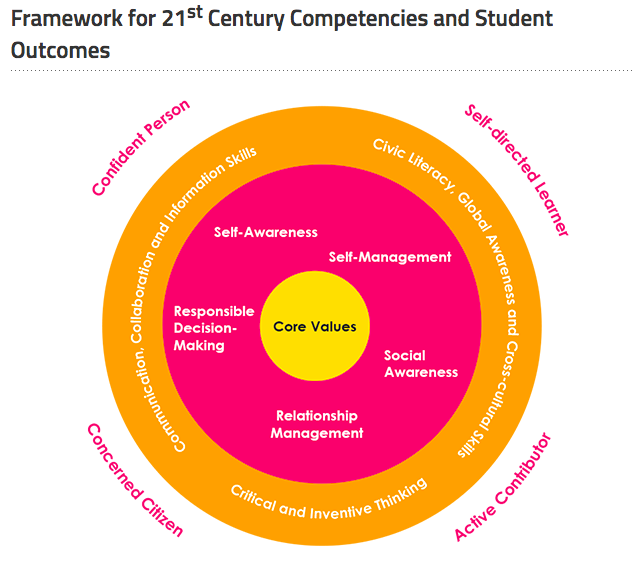
The World Economic Forum (2016) lists 16 skills for 21st century learning and they have included cultural & civic literacy and social and cultural awareness etc.


I think this is a great way to describe a holistic approach to curriculum development as it takes into account relevant competencies and personal character, not too sure about how the foundation literacies have been split up but good to see cultural and social awareness were explicitly included.

It was also interesting to learn which three NZ curriculum principles were the least well represented in classrooms based on research by ERO in a review done in 20012. Cultural diversity, future focus and treaty of waitangi were least well represented. I guess for most schools we are all trying to improve in these areas and probably could do with more help and professional learning in these areas.

We then dived into having a look at curriculum in other countries, and having spent a bit of time in Singapore back in the day I suggested we could have a quick look into this curriculum. We found some interesting information. Singapore includes civic literacy, global awareness and cross-cultural skills and social awareness as part of their 21st century competencies;


We were also wondering how well students from Singapore were rated in PISA and found that they were ranked top in math, science and reading in 2015 and also ranked highest in collaborative skills. They also seem to have a small number of bottom performers and a high number of top performers so the education system appears to be very successful for all students.

Agency

We then moved on to looking at learner agency which can be defined as the capability to make choices and act on these choices in a way that makes a difference to the learners life.

We watched a video from Tim Gander about learner agency. He was a teacher who inquired about how he could give his students more choice and how best to help develop their own agency. He developed and co-constructed what this would be for individuals. He create agency with the learners, and looked into how they could take action and deal with barriers, credits, timetables time pressures etc. Many of this they could not change but they did implement 20% time for self directed learning which they shared in an online learning community that also fed into assessments. They created a credits barrier hack by rewriting all the internal assessments to make them more authentic for the class. They developed a flow chart about what they were interested and boys could choose their own path and what they did to enable the choices. Many learners were initially lost and had trouble making the decisions and Tim wondered if by having agency essentially they had chosen to opt out. So they went back to redefine agency to include choices needing to make a difference to yourself and others. There was the ongoing tension of freedom to choose meaning they could choose to engage or not, and having a balance of academic rigour and freedom. This video brought up loads of themes around ways to engage students and how to handle assessments. Some food for thought.

We have just introduced some independent learning time at our school and have been looking at ways to support students to set realistic goals and actions. Many teachers have found some simple ways to engage students in meaningful learning and I look forward to seeing how this evolves over time.

References

Australian Institute for Teaching and School Leadership. (2016). Engagement in Australian schools. Retrieved from http://www.acleadersresource.sa.edu.au/features/engagement-in-learning/workshop-1/Handout_4_Engagement_in_Australian_Schools.pdf

Fredericks, J. A., Blumenfeld, P. C. & Paris, A. H. (2004). School Engagement: Potential of the Concept, State of the Evidence. Review of Educational Research, 74(1), 59-109.

World Economic Forum. (2016). New Vision for Education: Fostering Social and Emotional Learning through Technology. Retrieved from http://www3.weforum.org/docs/WEF_New_Vision_for_Education.pdf

Friday, 23 February 2018

Education - Innovative Learning Spaces and The Maker Movement


Week 12 - Innovative Learning Spaces and The Maker Movement

So I started by checking out this video before class - Steve Collis: Different spaces within a learning environment : Cave, Campfire and Watering Hole. Having now worked in an Innovative Learning Environment (ILE) at a new school the purpose of the different kinds of furniture and classroom setup makes a lot more sense. The way the environment is setup does allow for flexible learner centered activities. The video discusses how ILE ‘s puts relationships at the heart of the learning. Steve talks about these three broad kinds of spaces and intended relationships:
  • Cave - reflective space, free of stimulation, so learners can withdraw slightly, relationship of student to self. In a virtual space an example could be blogging as I am doing now. In our learning spaces we have some furniture that is a single desk with sides for time when students wish to complete work on their own with minimal disruptions.
  • Campfire - one to many relationship, essentially broadcasting expertise from a guru shared with the learners (often the teacher I guess could be another student too as we often get students to share expertise). In a virtual setting this could be like the flipped learning idea where students complete some online learning prior to the class where time can be spent refining, applying and consolidating the learning. In our learning spaces examples of this could be groups of students together on desks or seats with a teacher/student using a screen or whiteboard or other resources to facilitate a workshop or discussion etc.
  • Watering Hole - many to many relationships, free improvised problems discussions, great for collaboration. Virtual examples would be any web 2.0 tool, an example I think of would be any kind of collaborative tool such as a Padlet or even a shared google doc for brainstorming or sharing or reflective learning etc. When I think of physical spaces at our school for this to occur I think of students working in small groups of tables joined together or seats/ lillypads/beanbags on the floor with a whiteboard table in the middle etc. 
During class this week we started by looking at Maker spaces - Learning by doing, hands on, student centred, can be as big or small as student wants and students have control over their own learning. I really love the idea of maker spaces and I run a class at our school which is focused on Robotics which is much like a maker space but I guess with a narrower focus. I have to say that it is extremely popular as the students love the tactile learning involved and learn to code the robot in a practical trial and error way, learning throughout the whole process.

Then we moved on to selecting and completing 3 out of 6 learning stations. Station 1 caught my eye as it was about having a look at ILE research. We are often questioned about our approaches to teaching and learning in our new ILE and there are many pros and cons so I was keen to find out what the research had to say. This research by Imms, W., Mahat, M., Byers, T. & Murphy, D. (2017) is from the University of Melbourne and included a number of NZ school so is quite relevant.

Basically what we found after wading through a lot of graphs and analysis was that deeper learning is related to the teaching approach and teacher mindset. An ILE helps with moving towards a more learner centred approach, however, it is actually the teacher mindset and willingness to move from the more teacher centred traditional approach to more learner focused pedagogy that really makes the difference. This can be done in an ILE or a more traditional classroom, it's all about the pedagogy.

References
Imms, W., Mahat, M., Byers, T. & Murphy, D. (2017). Type and Use of Innovative Learning Environments in Australasian Schools. ILETC Survey No. 1. Melbourne: University of Melbourne, LEaRN, Retrieved from: http://www.iletc.com.au/wp-content/uploads/2017/07/TechnicalReport_Web.pdf

Other related articles that refer to the ILETC report:

Thursday, 21 December 2017

Education - Growth Mindset and Computational Thinking

Week 5 - Developing a Growth Mindset and Computational Thinking

For homework this week we were asked to take a quiz about our mindset. I’ve come across Carol Dweck’s ideas about ‘Growth Mindset’ before and how much this kind of outlook and related beliefs can help us as learners. So I wondered how I might score at this point in my life? Well, turns out I’ve taken on board a lot or already had quite a growth mindset as I came out with 0 fixed and 8 growth.

However, I think that often despite logically believing these ideas, at times I don’t always naturally have this view of myself or others. I have habits of negative self talk like ‘I can’t do this’ or ‘I’m not good enough’ when things get tough. But I guess, the first step is being aware of this and then taking action to not ‘get sucked in’ and limited by this initial reaction. I also have often thought about this from a learner point of view and not really from a leadership point of view. If anything basically can be ‘learnt’ why do we sometimes get so fixated on particular people or personality traits making good leaders, which is a very 'fixed' outlook. Surely these skills can be learnt with the right supports and motivations in place?

Another task was to try out a citation app and I had a go at https://www.mendeley.com which is cloud based so I thought it would be quite flexible and seems to be going OK so far as I’ve managed to add references into the library without too much fuss and also use them.

The last item of homework was to watch a youtube clip entitled The Poetry of Programming. Linda Liukas has some great ideas and developed an awesome book called Hello Ruby which helps kids develop programming skills through story telling. It is very encouraging for girls to get into coding and breaks the stereotypes of coding not just being for nerdy boys. I love her ideas about disruption starting with a vision and that code is the next universal language.

I myself have been breaking stereotypes ever since I left school by working in the male dominated IT industry and not working with many other women. I then did the opposite when I started work as a teacher in all girls schools up until my current job I have now. My entire digital classes used to be full of girls, and now every time I get a new class list for the digital classes one of the first things I do is look down the list and count the girls. Sadly each time the number of boys always majorly out numbers the girls. So still the stereotypes exists, and I will continue to make it my mission to make coding and computer science fun and engaging for all students and I will continue to challenge beliefs and ideas around fixed mindsets.

DIGITAL - Computational Thinking


So I arrived at class excited about the weeks topics as these are right up my alley. I’ve been following the development of the new Digital Technologies curriculum which is currently in draft and will be available for use next year. You should totally check it out if you are not familiar with it. It is a great step in the right direction for key technology development skills such as computational thinking to be taught to children as soon as they arrive at school rather than later on. It makes sense for kids to be exposed to these ideas early on in life, to be creators rather than consumers. However, resourcing and up skilling of teachers etc will be a mission for most schools and is a whole other issue.

We started class this week by pairing up and doing a ‘guess the number between 1 and 100’ game by asking each other questions. It is basically common sense to ask questions like is it less than or greater than etc to narrow down the number. This can then be easily programmed so a computer can play the game and can be made even more effective by changing the strategy slightly which essentially is computational thinking and algorithms in use. Someone in class mentioned that maybe it’s just the fact that the technical terms put people off a bit. Basically algorithms and computational thinking is about problem solving but the terms can freak people out. I have found students have come across algorithms in math classes but basically a knitting pattern, a recipe or instructions to fold a paper plane are all algorithms and we all use computational thinking but just don’t realise it. I watched a really great documentary a while back, you should check it out too it's all about algorithms if you are interested it was called The Secret Rules of Modern Living - Algorithms.

We then were given the challenge of writing some instructions to program a person like a robot to move around the room without bumping into things. Since both of us had coding backgrounds we wrote some initial instructions that looked quite ‘codey’ with while loops, conditions and degrees etc. Then reflecting on this we thought we should rewrite the instructions so they would make sense to anyone as someone else in the class was going to carry them out. So here are our two versions of instructions below. Other groups made quite lengthy accounts which were a lot like a treasure hunt, so many steps left/forward etc. In comparison we just went to a slightly different version which which could be argued was a little more efficient with less instructions needed due to a loop and conditional check. Algorithm efficiency is a whole other lesson in itself. So I guess this was our experience of coding kicking in which helped or hindered initially as we were programming humans not computers. But either way we all found a solution to the challenge in our own ways and all learnt something along the journey.


Another great video about getting started with coding and is inspiring is from Mitch Resnick.

LEADERSHIP - Growth Mindset


We had a look at the backwards bike video, where a man learnt how to ride a bike where the handlebars worked in the opposite directions. Even though we might know this is the case our brain can’t adjust and doesn’t understand how to ride the bike initially. This in some ways proves that knowing things doesn’t necessarily mean we understand things. It’s hard to change rigid entrenched thinking. If we apply it to understanding a growth mindset we might logically understand this but how do we put it into action to demonstrate our understanding? It is not always that simple.

There were some statistics given Diehl, E. (2013) about managers that had a fixed or a growth mindset. Basically there might have been short term gains with managers that had fixed mindsets but that long term the organisations had greater success with a manager that had a growth mindset.

Diehl, E. (2013) also found that growth-minded leadership involves:

- Validating and addressing staff fears and barriers
- Communicating the vision explicitly
- Providing support to those who lack knowledge or skills
- Creating opportunities to share research and information
- Allowing everyone access to growth opportunities
- Sharing the workload among all staff

Basically we should be concerned with our own personal growth and how we can support others to do the same, which in turn then lifts the whole organisation.

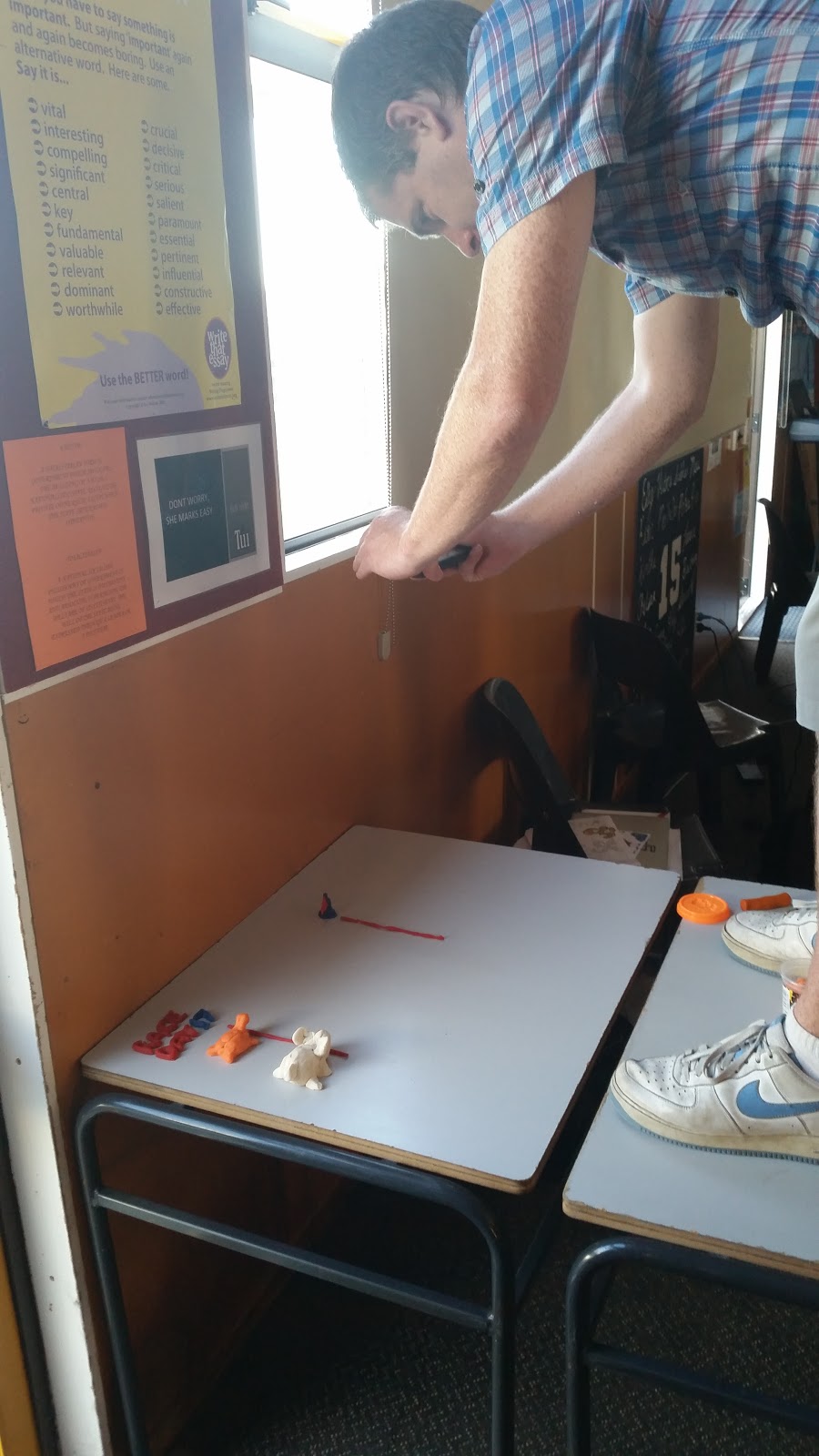
We were challenged to work in groups to create a stop motion to bust a myth related to a ‘fixed’ mindset. We discussed the idea of the tortoise and the hare race story which originally was about the hare being cocky and thinking it would easily beat a tortoise but he fell asleep and the tortoise won by being slow and steady. We did a version where the tortoise had a ‘growth’ mindset and trained and lifted weights etc then when it came to race day the tortoise beat the hare, so changing the narrative. The moral this time being that with a growth mindset, hard work and effort we can achieve great things. We had fun making this stop motion video, which somehow ended up with some interesting shots from on top of a table.

Another great session at Mindlab!


References
Diehl, E. (2013). Leading Change with a Growth Mindset. Community.mindsetworks.com. Retrieved from http://community.mindsetworks.com/blog-page/home-blogs/entry/leading-change-with-a-growth-mindset

Wednesday, 6 December 2017

Education - Digital Disruption & Implementing Technology...

Week 3 Flipped Learning (Homework)


Okay so I’m back for blog post number three - yeehaa! It has been a really fun week, so for homework we started by assembling Google Cardboard headsets. Once you are done you place your phone into the headset and it turns into a low cost virtual reality headset. You can check it out at https://vr.google.com/cardboard/. We were also asked to install the following apps onto our mobile devices - Aurasma, Quiver, Expeditions and Google Translate. If we had an Android device, we also needed to download Anatomy 4D and Elements 4D. I have had a tinker with this cardboard VR before but but had not used many apps so was excited to have another look into the possibilities.


We also read an article ‘Conditions for classroom technology innovations’ and it included some interesting stories about digital innovations that teachers tried to implement and how successfully or not so successfully they were implemented. Basically they came up with 11 key factors grouped into 3 areas which had an impact on the success of the technology innovations. The three key areas included:


  • The innovator (teacher) - their technological knowledge, how the tech fit with the teacher pedagogy, and knowledge of the school's social environment and organisational structure.
  • The innovation (project) - how much of a shift the innovation was from the current school culture, teachers current practice and current resources.
  • The context (school) - which included the technological infrastructure, human infrastructure (support staff, policies and processes etc) and the organisational culture.


I think in the end it was pretty much common sense (although a good friend of mine once said “well common sense is not so common actually”). Basically a strong teacher had the biggest impact on success, small incremental independent steps and quick wins worked well and social support was also needed.  I think that was the gist of the article in the end. So armed with my Google Cardboard I was ready for our classroom session (apart from the magnet button thing not working properly which totally bugged me).


Leadership - Implementing Technology Innovation - In Class Time

We launched straight into looking at two models that help teachers implement technological innovations in the classroom - SAMR and TPACK. Well, I was already familiar with SAMR but had not heard of TPACK before so this was great and I was keen to find out more about this.

SAMR was developed by Ruben Puentedura and includes 4 ways to integrate technology in your learning activities. You can check SAMR out on the TKI website. Mark Anderson has created a version of SAMR that shifts the focus slightly to teachers confidence. These tools help teachers to design learning tasks that significantly transform the learning experience.

TPACK (Technological Pedagogical Content Knowledge) was developed by Punya Mishra and Matthew Koehler and identifies the knowledge teachers need to be able to teach effectively with technology. I would like to look into using TPACK so that I can compare this with SAMR, so it’s on my list of things to do (which to be fair is quite long). I would like to use this in an upcoming assignment so will see how that goes.
We then moved on to looking at Google Tour Builder which is super awesome. You can create virtual trips around the world using Google maps and add images, text and notes etc to each location. Our facilitator used this to share her whakapapa as a kind of Mihimihi/Pepeha which I thought was an awesome idea. I would really love to create something similar for myself personally and use as an introduction of myself to students at the beginning of new classes and encourage students to do the same.

We were then asked to form groups and create an activity that could be used to create an activity we could use with our students. I ended up in a group creating a resource with two other work colleagues from our Junior High School that we could use at the beginning of next year. Basically in teams students could map out a tour of all the school trips they were going on like their camp and other service days and whanau development trips etc. We could go nuts using drone footage, assign student roles within the teams like editor, photographer, tech leads, etc. The tours could then be shared with the school community and caregivers and could evolve in real time if students had access to the internet. This was an example of a tour we started. We got pretty excited about our ideas and we worked really well as a team.

Looking back we did not actually use SAMR or TPACK to plan and evaluate our learning task - doh missed the boat on that one. So after a quick think about in retrospect, I think we pretty much did manage to plan an in-depth rich learning task and used the tech effectively and it would probably be at the highest level of ‘Redefinition’. Basically we were able to redefine the idea of a journal or diary of a trip by linking to a virtual map and add multimedia which totally transforms this idea and allows options for students to engage with the idea and wouldn’t be possible without using something like Tour Builder (unless someone would like to disagree?). Turns out that for homework what we are going to do involves going back to the planned activities we shared and evaluate these using these tools so its all good.

We also had a quick discussion about the article we read for homework and basically discussed the ‘messiness’ of trying to implement tech. I myself have had some epic fails and some awesome wins with tech in the classroom and I guess I personally always fall back on preparing, being organised and testing things out as much as possible but at the same time being flexible and calm when things don’t go so well which can often be the case. I’m usually pretty upfront with the students and involve students, they often have great ideas and love working things out together. We basically keep calm and carry on with problem solving, have a laugh or even quite happily abandon ship if needed and try something else if things are not salvageable. It is all basically a learning process and messy much like many IT jobs I’ve had in the past. It’s hardly ever smooth sailing and I’m all for a bit of real world learning and sharing of mistakes, problems and solutions.

Digital - Technology Disruption and Mixed Reality - In Class Time


Image Attribution: Evan-Amos - Own work Public Domain

For this part of the class we had a really fun time exploring Virtual Reality and Augmented Reality. We first had a go with Google Expeditions which was awesome! You can be the tour guide or the person taking a tour and you start the tour on your phone and then pop the phone into the cardboard headset and take a look around, you are immersed in the place as if you are actually there. We took a tour around the Great wall of China and trip under the sea, it was really fun!

We also had a go with Aurasma and created a cartoon drawing of ourselves and when you placed the phone over the image this triggered the information you wanted to pop up on the phone. We took a short vid of ourselves and when someone placed their phone over the drawn image the video would pop up on their phone. This was also super fun. I can imagine how students could use posters up on the wall around the school or handouts to find the hidden info. They could create these quickly and easily, I could see students very engaged in these kinds of missions.

Another awesome tool was Quiver, basically you start by printing out some colouring pages and colour them in. I had a volcano diagram and coloured it in. Then when you put the phone over this it would register the drawing and it would pop out in 3D with the colours you have drawn and you can inspect the volcano and show and hide different parts in 3D. It was very cool!

Something similar was Elements 4D and Anatomy 4D these were printed sheets and when you held the phone over the printed image a virtual image popped out in 3D and also moved so was 4D like a person’s real heart was pumping and could be inspected. You could turn it around and look at different parts zooming in and out - super rad!

So we definitely all had some serious fun and I felt really inspired after this session. The sessions always go so fast. For a late night after school on a weekday from 4pm to 8pm it has been awesome to to be so inspired and so totally worth the effort - if there were only more hours in a day to implement these great ideas.


References

Zhao, Y., Pugh, K., Sheldon, S. & Byers, J. (2002). Conditions for classroom technology innovations. Teachers College Record, 104(3), 482-515. Retrieved from https://www.rtsd.org/cms/lib/PA01000218/Centricity/Domain/96/Conditions%20for%20Classroom%20Tech.pdf

Sunday, 19 November 2017

Education - Knowledge & Followership

Introduction

Well to cut a long story short, I'm not actually too sure about who might be interested in reading about my thoughts and why anyone might even be slightly interested. But, I figure, if I give you an idea of why I've started this blog and what I might be bleating on about you can then decide if you would like to read on, or you would rather close this and go check Facebook or do something else.

I'm currently a New Zealand secondary school teacher who in a past life didn't really enjoy secondary school so left a bit early and completed an IT degree. I then worked in the IT industry initially before training to become a teacher. So the journey is a little bit ironic in that I ended up becoming a teacher after busily trying to escape school.

However, I have always loved being creative and having fun with techy stuff so my specialist teaching area is digital technologies (apparently I'm also supposed to be able to teach math but have avoided this due to panic attacks about recalling times tables. Being a bad speller is bad enough as a teacher having to write on whiteboards without a spellcheck in my brain). Anyway, at this point I'm currently employed as a Learning Leader specialising in eLearning and am a foundation staff member at a new Junior High School. I'm still trying to figure out what exactly my job entails at this school as my job description has changed and evolved somewhat since I started.

It has been a crazy couple of years being part of starting a new school and during these past 2 years we started with about 600 students and have grown to about 1000 students. It would be a wee bit of an understatement to say that we have been a bit busy and it's a little mad but myself and four other work colleagues have started a postgraduate course in collaboration, elearning and leadership. The idea is that I'll put my thoughts and learning into a blog, this will serve as a way to organise my thoughts and reflect and share what I've learnt with anyone else who might be interested. I have always thought I should try this blogging business out and have started down this track in the past with some of my students but have not really ever carried on with them. I would really like to see this one through till the end of the course. I am interested to see how it might help me reflect and improve my teaching and leadership practice and how it might be received by others.

I am pretty petrified about publishing this and am pretty much pooping my pants (trying to be PC and a good role model about this but you can probably imagine what I'd actually like to say about this process). I was more of a sit at the back of the room doodling under the radar type of gal at school. Writing was not really my buzz I would have rather poked my eyes out with a stick than go to my English class and I failed miserably at writing essays for my History class. So, I'm sorry in advance about the quality of the writing and thank goodness for red squiggly underlines and right-clicks (actually I've had to retrain myself to do 2 finger taps now that I'm using an Apple). I have also learnt a lot from English teachers like the words a lot are two separate words not one and to not end student report sentences with "she is capable of" because you can't end sentences with a preposition whatever that actually means I'm still unsure so I just changed the sentence.  It's a great strategy I've used many times and so is procrastination. So speaking of which I'd better get cracking on with a reflection of the first session.

Basically for the first half of the course there are two separate themes running throughout each session. One is leadership and the other is digital collaboration.

Week 1 Digital Collaboration- What is Knowledge?

So we had discussions in groups and some of us discussed "what is knowledge" (ying) and other discussed "what is education" (yang). We used playdoh (yes we are adults and despite some initial reservations we actually enjoyed this) to represent these ideas. We then looked into some research around these ideas and refined them. Finally a ying group and a yang group came together to create a collaborative representation and videoed or photographed the final outcome.

We looked at the ideas that many of us are familiar with such as knowledge not being a noun, that it is more like a verb. It is not simply absorbed, we take action when learn and do stuff with knowledge. I also feel that the context of learning is social and that we develop some kind of shared understandings when we learn and that we all bring something to the experience and can learn from each other, similar to the māori concept of ako. I believe education is about acknowledging our part in the interdependence of ourselves with others. Ideally education should motivate and support people in becoming happy well adjusted members of society in our own country and in the wider connected world. But I guess the more complex issue involved is actually how exactly can do we do this successfully and in a sustainable manner in our schools today. I feel like this is what we as educators are often pondering and grappling with at times.


Week 1 Leadership - Followership

So we were then asked to reflect on what kind of follower we thought we were during the task of creating the video. Ideas from Kelley (1998) were presented:
  • Sheep - passive and seek motivation and need their leader to do the thinking for them.
  • Yes-people - positive and support the leader but still need their leader to do the thinking and they will ‘do’.
  • Alienated - negative followers that think for themselves but pick holes in the leadership
  • Survivors - sit on the fence and are passive, won’t be the first to jump on board with the leader but won’t be the last either. Maintain the status quo.
  • Effective - think for themselves, positive engery, accept leadership and still have own opinions which they can still disagree with and offer alternatives and help when needed. 

I guess we would all like to think we are effective followers, but if I’m honest with myself at times I’ve probably had a turn in all the above categories in different situations in my life. During our little video challenge I did at times express my own ideas however, I was pretty awkward. I was also nervous as I didn’t really know most of the other people in the group so tended to hang back. Others confidently took the lead and were doing a great job in all aspects and the techy bits too. So I guess this is kind of my default which is, as long a team is heading in the right direction I’m happy to do what I can to help when needed, I guess I try to be a good follower by sitting back at times so others can take lead. But on the flip side maybe at times I could step up more often and allow others time to follow.

The other bit of homework was to reflect on what I consider a good leader to be like. So rather than particular dispositions springing to mind I thought about one of the best leaders I’ve even known in the school context and I would describe her as the following, based on how awesome she made me feel as a follower:
  • A great communicator
  • Down to earth
  • Forthcoming about decisions and how they were made
  • Inclusive of others
  • Respectful of others
  • Empathic and could see issues from all angles and points of view
  • Resourceful
  • Supportive

So these are all traits I guess I aspire to develop myself as a leader. I’m sure we will unpack these ideas more in the coming weeks and I’ve spent waaaaay too long sitting in this position, my back has totally seized up so I will leave it there and move on to some final coments.

Final Comments

So being a bit of a nerd I’ve gone back to check that I’ve completed all my tasks. One of the tasks for homework was to reflect and consider sharing my knowledge with a wider audience, so check it out, I've nailed this one right!

However, another task for (optional) homework was to reflect on how my understanding of the purpose of education is visible in my classroom. First of all yes you know you are a nerd when you feel the need to complete optional homework (which they call “reflect after” learning lol).

Well this is an interesting idea as I don't really have a classroom.  We work in an innovative learning environment (ILE) which I think might be the most recent acronym for open plan flexible learning spaces, there have been a few including MLE etc. I used to have a computer lab back in the day (just over 2 years ago) and quickly worked out that I’ll just go with a portable lab idea. When a class is about to start I simply burst out of a nearby cupboard with my nerd trolleys that store all the specialist gear needed like robots and laptops etc. So basically CLOWs (Computer Labs on Wheels) instead of just COWs. Each term I might be timetabled in another part of the school with no computers or gear which might freak out some digital teachers but that’s all good I just take over another cupboard. I guess we don’t really use the walls (not really that many of them either being open plan) much either as it always feels a bit temporarily and shared I never really feel like our class 'owns' it. So keeping my understanding of the purpose of education visible in my classroom is probably not so much about what is actually visible like things on walls in my classroom it is probably more invisible like the atmosphere of the class. This comes through in my communications, attitude and focus of learning and how I engage with the learners and this climate becomes my “classroom”. Oh man I hope some of that actually makes sense when you read it!  I really need to call it a day and go to bed.

So I just asked google how long a blog post should be and apparently top ranked blogs average about 2416 words for a blog post. I have not quite hit the mark yet but this is so close enough and I even added a picture so this should be some bonus points.  It took me way too long to write this, and I’m not sure if I can keep this up each week but anyway I’ll give it a go. But it could end up much like diets I’ve started on a Monday only to give up by Tuesday. It is awesome if you have read all of this so thanks very much for entertaining my ideas for this time (even if you did just skim read and jump to the bottom, I’ll forgive you). So the challenge is on. Will I write another one? Does anyone care or find this interesting? I guess time will tell. Have an awesome day and you can now get back to checking Facebook.

References

  • Kelley, R. (1988). In praise of followers. Harvard Business Review, 66(6), 142–148.
  • I would also like to take another look at some of Gert Biesta's ideas about education

Week 32 - Reflective Practice

Week 32 - Reflective Practice The last mission to wrap up my personal 32 week journey is to reflect and critically evaluate one key chang...