Showing posts with label Professional Relationships. Show all posts

Saturday, 23 June 2018

Week 28 - Influence of Law & Ethics in Practice

Week 28 - Influence of Law & Ethics in Practice

Professional and personal digital worlds are quickly becoming more and more blended and sharing of personal and professional information happens so quickly using digital tools - how much control do we really have in this process and where do we draw the line?

Recently I was on a school trip and a teacher suggested we should take a selfie and share this with a few of her students who were also on this school trip via an Instagram group. Before I knew it the picture was taken and shared by this teacher. After this occurred I felt quite uncomfortable about what had happened.

I will use a model from Ehrich et al. (2011) to try to explain the moral decision-making process involved in unpacking this ethical dilemma.

Step 1 (What): Step one starts by describing the critical event that has triggered the ethical dilemma which I have explained above.

Step 2 (So What): The next step involves exploring the key competing forces that impact decision making from their own bias viewpoint:

Organisational Culture - The teacher obviously thought this was a great way to connect with some of her students. The reasoning could include that connecting with students is part of our school's vision statement which includes being connected and community-minded and includes the importance of social and emotional aspects. The teacher probably genuinely thought that this was a great way to connect and share aspects of the trip with her students.

Public Interest - The public and school community including the caregivers might not be so supportive of a teacher sharing a picture with a private group with students and could see this as inappropriate and intimate in nature. Why was the picture not shared with all of the students involved in the trip and just a few select students?

Professional Standards - The Education Council (2017) outlines our standards which include ‘2.2 Engaging in ethical and professional relationships with learners that respect professional boundaries.’ An example of a possible breach is given which states fostering online connections with a learner outside the teaching context like ‘friending’ without a valid context. So this example could be interpreted by people as similar to the example and thus be crossing this professional and ethical relationship boundary line.

School Policy - I have also checked our Staff Social Media Policy which also provides guidelines that state that personal use of social media by staff must also be governed by confidentiality and professional standards. We are also warned to consider whether it is appropriate to extend or accept friend or connection requests with parents, students, or others involved in the school.

Step 3 (Now What): This step involves discussing how the Code and Standards should be interpreted to assist in the ethical decision-making process. In the future, as this type of digital sharing may be perceived by others as crossing a professional boundary next time I would state that I would prefer not to be in the photo and not to be shared with students. I would also explain why so the teacher who instigated this idea would also stop and consider this ethical dilemma for themselves. PPTA (2014) have also provided some guidance on the use of Social Media and also highlights the obligation to maintain appropriate student/teacher boundaries when using any social media.

References:

Education Council (2017). Our Code Our Standards. Retrieved 21th June, 2018 from:https://educationcouncil.org.nz/sites/default/files/Our%20Code%20Our%20Standards%20web%20booklet%20FINAL.pdf

Ehrich, L. C. , Kimber M., Millwater, J. & Cranston, N. (2011). Ethical dilemmas: a model to understand teacher practice, Teachers and Teaching: theory and practice, 17:2, 173-185, DOI: 10.1080/13540602.2011.539794

New Zealand Post Primary Teachers’ Association (2014). Digital Communication. Retrieved 21 June, 2018 from: https://www.ppta.org.nz/dmsdocument/139

Saturday, 14 April 2018

Week 19 / Contribution of Teacher Inquiry Topics to my Communities of Practice


Week 19 / Contribution of Teacher Inquiry Topics to my Communities of Practice

Reflection Objective: To critically reflect on how two potential and inspiring digital and/or collaborative learning related teacher inquiry topics would contribute to my communities of practice

Method: I will use the model from Jay, J.K. and Johnson, K.L. (2002) to reflect in three stages.

Step 1 - Descriptive
I have identified two possible inquiry topics:
  1. How can I more effectively support students to develop their learner agency and take action to engage in deep learning opportunities?
  2. How can I more effectively lead, support and inspire staff with the implementation of digital fluencies and digital technologies curriculum. 
Wenger (1998) defines a community of practice (CoP) as a “group of individuals participating in communal activity, and experiencing/continuously creating their shared identity through engaging in and contributing to the practices of their communities”.

(Wenger, 2000, p.229) suggests that a CoP is defined by and comprises of the following three aspects:

Joint enterprise (domain): is a shared domain which is the “collectively developed understanding of what the community is about”.
  • Mutual engagement (community): the members engage through interactions within the community, building mutual trust in the relationships.
  • Shared repertoire (practice): is “the communal resources” that the community of practice produce.
  • Another definition from (Wenger, McDermott & Snyder, 2002, p.4) suggests CoPs are “groups of people who share a concern, a set of problems, or a passion about a topic, and who deepen their knowledge and expertise in this area by interaction on an ongoing basis”. 
My CoP
  • Domain - I currently lead the school wide digital fluencies initiative and am always looking for more effective ways to implement this and support staff. We also would like to more effectively develop learner agency and help students to access deeper levels of learning in this area.
  • Community - consists of the Advisory Teachers who are implementing this initiative, as well as Hapu and IWI leaders, myself and the Senior Leadership Team. We currently engage and interact through leadership meetings, Hapu meetings, informal chats and drop-in sessions, and PD sessions. We could investigate how we can use these opportunities more effectively to develop a more active and effective CoP. 
  • Practice - We can continue to develop and share relevant resources, our challenges and successes with each other via our learning management system, shared Google drive, emails and in our conversations and interactions. 
Step 2 - Comparative

Current barriers that prevent staff from being more active and engaged include time and work pressures, we are a relatively new and large school whose culture of learning is still developing.

Another barrier might also be the confidence levels of the teachers in this area, many might be reluctant to assertively engage with the future focused contexts and digital technologies as also found in research by Jamieson-Proctor, R. M., Burnett, P. C., Finger, G., & Watson, G. (2006). Another study as discussed by Hsu, H., Wang, S., & Runco, L. (2013). Even when confidence was high in use of digital technologies, meaningful technology integration and new literacies practices were scarcely observed in their classroom practices.

Staff members are keen to pursue more student driven, personalised approaches that we can explore next term to try to mitigate the confidence and engagement levels of staff, as the staff can learn alongside the students who are taking more of the lead.

Step 3 - Critical Reflection

To continue to grow my CoP I must seek ways to more actively engage and explore the domain and use the CoP to work through the barriers and challenges together to improve our practices as a collective. As Bruce Knox suggests the success depends on the energy of the community that the community generates.

References
Hsu, H., Wang, S., & Runco, L. (2013). Middle School Science Teachers' Confidence and Pedagogical Practice of New Literacies. Journal Of Science Education & Technology, 22(3), 314-324.

Knox, B (2009) - Cultivating Communities of Practice: Making the Grow. Retrieved: https://www.youtube.com/watch?v=lhMPRZnRFkk.

Jamieson-Proctor, R. M., Burnett, P. C., Finger, G., & Watson, G. (2006). ICT integration and teachers’ confidence in using ICT for teaching and learning in Queensland state schools. Australasian Journal of Educational Technology, 22(4).

Jay, J.K. and Johnson, K.L. (2002) Capturing complexity: a typology of reflective practice for teacher education. Teaching and Teacher Education, 18, 73-85.

Wenger, E. (1998). Communities of Practice: Learning, Meaning, and Identity. Cambridge: Cambridge University Press.

Wenger, E.(2000). Communities of practice and social learning systems. Organization,7(2), 225-246.

Sunday, 28 January 2018

Education - Diffusion of Innovations and Digital Leadership & Design Thinking in the Classroom

Week 8 - Diffusion of Innovations and Digital Leadership & Design Thinking in the Classroom

Prior to class we were asked to watch a video about Design Thinking and reflect on the role of feedback at each stage. Design Thinking is a method for how to come up with ideas, it seems to be particularly good for complex projects and problems. It involves interdisciplinary teams, prototyping and trying out possible solutions.

It is essentially a process with the following key stages and it is not really linear as it is iterative and messy, you often loop back into different parts of the process:
  1. Empathise - with the people, their needs and problem.
  2. Define - the problems, issues, needs etc.
  3. Ideate - explore possible outcomes and solutions. Try not to just go with initial ideas as they are probably not new, try to come up with many and let them cross pollinate. Resist the urge to defend your ideas and discuss these with the people involved.
  4. Prototype - some of the best ideas.
  5. Test - try out the outcomes with the users and stakeholders.
  6. Reflect - on the successes and failures and the process.
This reminds me of the NZ Technology Curriculum which is essentially the same kind of process. At our school we also have a similar learning process that we use with students. So these ideas are very familiar to me, I believe stakeholders are extremely important throughout the whole process of developing solutions to problems. Feedback and feedforward is critical in being able to assess if the ideas, actions and outcomes are appropriate and on the right track the whole way through. I think a key mistake that is often made in technology development is that the designer or developer creates something they think the user needs and this can be quite different to what the user actually needs and wants. Like this tree swing analogy often used when describing the pitfalls in the process of an old software development methodology.

We also looked at what is involved in good quality feedback as demonstrated in the Austin’s Butterfly video. This is classic and demonstrates how powerful it is when you break down the tasks into smaller steps taken one by one, develop trust and provide very specific feedback along the way.

We then worked in pairs and followed the Design Thinking process to rapidly develop a prototype for each other that would help the other person be a better online learner. We started with getting the user story, their prior experience, needs and problems. We came up with ideas and sought feedback.

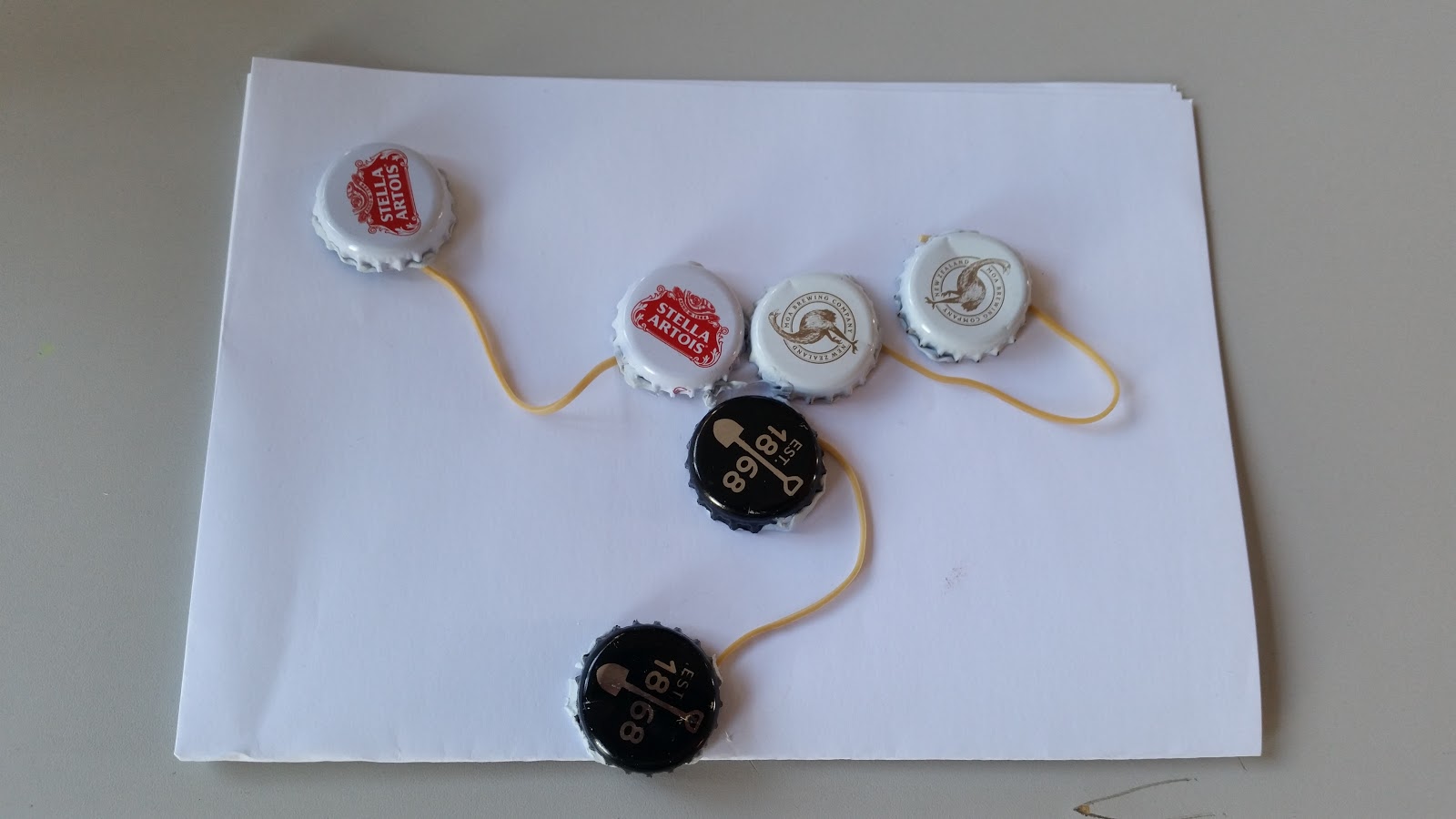
Prior to class we were all asked to bring some useless items and we used these for our final prototypes. My final idea involved my client connecting with another class member via Skype and working through the online class activities together. His home office could also have a visual board that had the due dates and deadlines to keep him focused.


My partner had also come up with something similar for me based on my needs and problems. The three bottle caps on the outside represented people connected together using the internet to do the online learning together. The paper represented the people also being the same physical location all together in the same learning space like a room or cafe etc as I like blended learning but also value the face-to-face time to discuss and reflect.


We also had a quick look at the idea of perception and sometimes you need to work through what you don’t want or need to find what exactly it is that you need or want. This is demonstrated in The Little Prince Book. When asked to draw a sheep it was never what the other person had envisioned until he drew a box and you could imagine the sheep inside the box.

Then we had a quick look at some resources for Design Thinking as there are many versions:
  • IDEO - Design Thinking for Educators - how to toolkit for educators
  • Notosh - Ewan MacIntosh’s book - how to come up with great ideas
  • Hasso Plattner - Redesigning the classroom experience
  • Eco innovators - Design Play Cards
We also looked at a video about Diffusion of Innovation Theory - The Adoption Curve. This talked about how we should market the use of digital tools differently to each of the the different kinds of adopters, early and late etc. It also discussed how important it was to cross the gap between the early trend setters and the majority.

This lead on to looking at the 7 Pillars of Dig Leadership from the Digital Leaders book by Eric Sheninger:
  • Communication
  • Public Relations
  • Branding
  • Student engagement/learning
  • Pro growth/development
  • Re-envisioning learning spaces and environments
  • Opportunity
The first three are very important and much like a business, a digital leader needs to be the brand leader. How can you…?
  • Communicate with your main stakeholders in real time? Which Tools?
  • Take control of public relations to spread positive news?
  • Establish a brand presence - your professional brand, your school’s brand or even your change initiative brand?
I guess I hadn’t really looked at it like that before but it makes sense. Teachers may or may not want to simply adopt new digital practices without understanding why and how and how others have already used it etc. Some examples of how we could communicate with our stakeholders like staff, students and caregivers could be via Facebook stories, app reminders, our LMS Schoology and the newsletter etc.

So some great ideas to reflect on and have inspired me to make changes to my digital leadership practice. For example I could communicating more effectively with the stakeholders involved, I will dive into these kinds of ideas as part of my first leadership assignment.

Thursday, 21 December 2017

Education - Leadership Theories, Styles and Attributes & 3D Modelling and Printing


Week 6 - Leadership Theories, Styles and Attributes & 3D Modelling and Printing


This week the first homework task was to check out the video 'Leadership Theories and Styles', then identify a change initiative that I have been involved with. Apparently early on prior to the 50s leadership theories used to be focused on the person, then beyond the 50s it was more role focused and from the 70s onwards it has been more about the processes. The 7 leadership theories covered in the video were:
  • Transactional - exchanges between leader and followers
  • Transformational - engaged with motives and empowers followers, pays attention to professional development needs etc.
  • Pedagogical - NZ typical approaches to school leaderships, academic missions and promotes professional development
  • Distributed - shared and collective interactions and the situations define the leadership style
  • Servant/Agile - Sharing awareness, listening and empathising. Lots of styles involved. Unleashing talent of others.
  • Tū Rangatira - Common NZ approach in Te Kura schools, about innovation and vision. Leaders have a number of roles and a range of styles, and management different to leadership.
  • Situational - old theory, leader adapts to the maturity of the followers, direct if low maturity and then move more towards supporting and coaching.
One particular change initiative didn’t really spring to mind and I was not really too sure about some of the differences as the video only gave a very brief description of each so I was hoping the in class time helps with understanding these and I'd get some more ideas about how to apply this to my current school situation.

So I moved on to the next task which was to use a tutorial video to make a bag clip using Tinkercad and using a mouse did make it a bit easier to navigate. I had a go and did manage to make the bag clip as you can see. There were some great tips on the video about how to do this. Basically you used a bunch of different 3D shapes and joined them together with a few techniques to get the final outcome that could be 3D printed.


I was quite proud of my efforts and ready for class!

Week 6 - LEADERSHIP Theories, Styles and Attributes.


We started with a class challenge where a random picture would be displayed for 15 seconds and each person took one of the 15 seconds and would talk about how this related to leadership theories. Pechaflickr was used to display the images, you just put in the keyword like ‘leadership’ and the images appeared. It was pretty funny and challenging with everyone participating and coming up with something on the spot.

We then moved on to work in groups and were asked to pick one leadership theory. We chose to take a look at Situational Leadership. Basically this kind of effective leadership involves a logical understanding of the situation and an appropriate response, rather than a charismatic leader with a large group of dedicated followers (Graeff, 1997).

We then all took a quiz to check our style of leadership. So my results came back as the following:
  • Authoritarian 30
  • Procedural 35
  • Transformational 37
  • Participative 39
  • Laissez-Faire (Serviant) 37
I found it interesting that the weightings for me were pretty even, but maybe more of a leaning towards Participative, Transformational and Liassez-Faire type of leadership. So we then had a look at the chart about the different styles that were summarised and it was interesting to look at the types of control involved. Basically the ones most like my style had medium to low amount of control required. This makes sense as I like to involve others, participate, consult, reason and be helpful rather than control or tell people what to do. However, as a parent and teacher at times like when it comes to safety or resource management etc I will direct in an attempt to control the situation. Although, I’m also a fan of letting things run it's course and natural consequences and also sharing the reasoning behind any directives given. So in the end this website gave a good summary of these kinds of leadership and a great place to start reflecting on personal leadership and followership.

We also had a quick look at a video about EQ and Goleman’s styles and attributes of leadership. Emotional skills were considered to be two times more important than technical skills. The five areas that make up emotional intelligence are:
  • Self awareness
  • Self regulation
  • Motivation
  • Empathy
  • Social skills
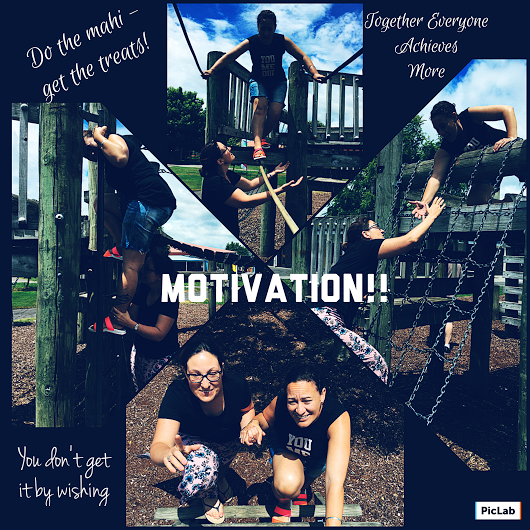
In groups we were challenged to make an image that focused on one of these areas and we picked ‘motivation’. We used the piclab app on a phone to make this great image made up of pictures we took and text we added.


It was also interesting to find out that Google also freely share their New Manager Training Guide, which includes some important aspects of emotional intelligence and a growth mindset that social skills can be taught etc. Also a great video about empathy and sympathy worth checking out from Dr Brené Brown. A great message about sympathy vs empathy. Having sympathy means you look into a situation, and empathy is a vulnerable choice to connect and sit with people rather than trying to fix it. I really like this analogy.

Week 6 DIGITAL - 3D Modelling and Printing


We then moved on to looking at aspects of 3D modelling and printing. We talked about issues like not having the resources like the printers and the time it takes to print things which can be difficult to manage in the classroom. The facilitator pointed out that she had outsourced some printing like earrings she had designed. I had not really thought about this as an option but I guess this is worth looking into further. Maybe we can send off our models to get printed somewhere else rather than purchase and maintain printers ourselves - a great idea!
We then had a go with SculptGL we started with a sphere of clay and started to make an animal then we all swapped seats and worked on someone else's and this how mine ended up looking. It was a simple idea to swap seats but very powerful. I felt pressure to try hard to make it work on someone else's sculpture and it was great to let go of control and see what others were able to come up with.


We then went back to Tinkercad and had a go at creating a Christmas decoration which was fun and frustrating at the same time. These tools were a great way to develop our spatial skills, creativity, and measurement to name a few. There is also research that states “strong spatial thinking, a skill necessary for creating three dimensional objects, is directly linked to success in science, technology, engineering and mathematics...spatial thinking can be taught and improved through practice.” (Karon, 2015). 

This is the last class as we head into to a break for Christmas and I'm really looking forward to unplugging, getting off the grid, and going camping with my family. My next blog will be in the new year so please take care, have fun, merry Christmas and all that jazz, I'll catch you on the flip side!

References

Graeff, C. L. (1997). Evolution of situational leadership theory: A critical review. The Leadership Quarterly, 8 (2), 153 - 170. doi:10.1016/S1048 - 9843(97)90014 - X

Karon, P. (2015). Teaching 3D Modeling to Children. CG Cookie. Retrieved from https://cgcookie.com/2015/05/29/teaching-3d-modeling-children/

Saturday, 25 November 2017

Education - Leadership, Competencies & 21st Century Skills


Week 2
I would like to start by saying thanks heaps to the people who were supportive of the first post, you guys totally rock! It really did spur me on in doing this next one so thanks heaps. I’m determined to keep this up so yay for blog post number two! As you might have read the first one you have probably noticed that I do dribble on a bit - I’m sorry about this. I’ll try to keep it a bit more succinct but I’m unsure if I’ll manage as it’s a bad habit of mine and worse when I’m nervous.

Anyway on with the job, so, for the ‘flipped learning’ task (basically homework in preparation for the next class) we were encouraged to read an article - "Towards Reconceptualising Leadership: The Implications of the Revised New Zealand Curriculum for School Leaders Case Study". By Wayne Freeth University of Canterbury, Christchurch, New Zealand with Vanessa de Oliveira Andreotti University of Oulu, Finland.

It was pretty hardcore reading and did require a coffee break for me to finish it but from what I can gather it had a few interesting themes. I think (I’m still a tad unsure) that Wayne was basically looking into how school leaders are re-interpreting and implementing the 2007 curriculum. In particular he was interested in the links between the new understandings of knowledge and learning and how these ideas would flow over into changes required in leadership to reflect these new understandings. His more specific focus was on distributed leadership and how this links to knowledge as a noun vs verb.

If we first go back to the older more traditional understanding of learning as a noun and something we accumulate or soak up this kind of view is reflected in leadership that is autocratic, bureaucratic and hierarchical. Basically a leader holds the knowledge and skills that the follower is trying to gain, essentially leading from the top down. However, if we look at a more modern understanding of learning as a verb that people co-construct together, this view fits better with more distributed, democratic and transformational leadership styles. In this way one person does not own or hold the knowledge and this requires us all to be leaders and learners at the same time, this includes all teachers, management including the principal and the students. So is this more modern approach reflected in the structures of school leadership in our schools today?

These ideas kind of made logical sense at first, of course we should implement flatter structures to reflect this new understanding of learning etc but thinking about it a little deeper it does not appear to be such a simple idea in terms of how this might actually be implemented due to maybe the more practical aspects of people's roles, decision making processes, time and resources. Essentially an older view is so ingrained, we label ourselves and place ourselves into hierarchies all the time. In my last blog I bleated on about being a digital technologies teacher and elearning learning leader and avoiding the math subject as a secondary teacher despite being trained to teach this as a second subject area. These are very narrow hierarchical views. I was talking about silos and people being the gatekeepers of knowledge based on job titles and experiences etc.

However, if I really try to shift my outlook to learning as a verb and being about co-construction, I see my roles quite differently. Although I have specific job titles I actually facilitate learning that involves literacy, math and other specialist knowledge. These kinds of knowledge are such an integral part of creating any digital outcome. Anything we create in a digital way is about communicating a message or can be interpreted. Whether it is using language, numbers, symbols, images or sounds etc it still all communications (the C part of ICT) not simply digital technologies as my subject specialisation states. You can’t create a computer program without eventually running into logical math expressions or text or graphics etc.

In our school we the teachers and students are co-constructing new knowledge daily. Whenever we teach our integrated modules (two subjects with 2 teachers), we bring our knowledge as teachers and students together to create new understandings. For example in my current class this week I (as a digital technologies specialist) am working with a languages specialist and together the students are creating weather forecast videos in french. We including myself have all learnt something different because we all came with different prior knowledge and skills.

I am wondering are our job titles and leadership titles actually necessary? Do they just perpetuate an old and outdated view of knowledge, and gatekeepers of knowledge. In fact I used to sign off with my Job title as ‘Learning Leader - elearning ‘but a while back I dropped the elearning bit off and I think I even had Digital Technologies teacher on there before that which I removed prior to that even.

I’ve also been wondering - what if when I left school I just decided to study something different rather than take the IT pathway like science or art? Would I have been just as successful in my career? I actually think I would have been if I had put in the same amount of time and effort. But I guess out of practicalities we start to specialise at secondary schools and definitely when undertaking tertiary study and jobs. Is there a right time to specialise into areas, should we just do this later in life? I believe we can simply learn whatever we need to, whenever we want to if we have been able to develop the skills to know how to learn and are motivated to learn. Although I was an apathetic average teenager who didn’t like secondary school much, I am still very grateful for having learnt the basics of being able to communicate with text, language and numbers (which happened to be very seperate subjects at the time). I’m also very grateful that my parents valued education, despite leaving school early I was still expected to continue learning whether it would be at a job or at some other kind of formal education.

If we really took these new ideas of learning and teaching onboard and worked more collaboratively, how flat would we and could we make the leadership structures in our school without creating a fair bit of chaos. Is my view a little pessimistic, maybe this would be possible to do quite successfully? Are we all simply people first, who are both learning and leading at the same time it just depends on the situation? Should we just get rid of our titles, labels and curriculum silos and divisions altogether? We made the decision to call teachers by their first names at our school to remove some of the hierarchy and older views of knowledge being held by particular people and the power imbalance of knowledge as a noun. How far do we take this? What should we write onto a “Hello my name is….” sticker just our name and leave off the title that often follows this? How would we define ourselves as learners and teachers without labels? Does our job title define who we really are, what we really believe, our success and what we are trying to achieve in our schools? So back up the truck, I think I’m lost down some crazy rabbit hole now! Time to hit the reset button and get to some kind of point.

Ok, so, clearly I got a bit lost in the reading and I found it hard to keep up with all the ideas presented. My brain was overheating and that was just one of the many themes. In the end the article talks about multiple truths and I guess I totally concur with him on this one as I personally think one truth doesn’t really exist as everyone interprets situations in their own unique way and truth is simply someone's perception of an idea or situation so it is only true for that one person or others who agree and see it the same way. In a lot of ways we are all walking contradictions, we say we believe knowledge is a verb but busily label ourselves and others and conform to ideas of subject silos and hierarchies for many practical reasons.

So we live in a constant dichotomy of multiple truths and I guess it is much like a swinging pendulum depending on the specific situation we discuss. In school for example we can say we believe that knowing how to learn and the 4 c’s (communication, collaboration, creativity and critical thinking) for 21st century learners are the most important skills learners should develop and then in the same breath carry on busily writing our curriculum progression rubrics for our subject areas in our subject silos and plan our learning objectives based on our specialist silos of knowledge and make sure we are cover the appropriate parts of the curriculum and tracking the exact bits students have “learnt”. We can’t always be so idealist, we have national curriculum, directives we must confirm to and only so much time and resources. But maybe we can do more to move forward.

Our school has tried to put dispositions at the forefront of our ‘school curriculum’ with our CLOAK values (Challenge our mindsets, learning is connected, ourselves as learners, ako always, and kindness and respect) - but do we really keep them at the forefront of our learning or are these crowded out by our silos of curriculum and content knowledge and areas of compartmentalised leadership? Are these really 21st century or even current or future focused enough? Maybe they are good as a broad umbrella and the 21st century skills come out from underneath these?

I guess I’m left with more questions than answers on this one and am hoping the in-class time will help unpack this thinking. I’m pretty spent on thinking about all of this, my brain is officially fried.

In Class Week 2 - Leadership - Key Competencies in Leadership
So we discussed the above article in class and I had a light bulb moment - I thought the new ideas about knowledge were similar to the notions of the ‘fixed’ vs ‘growth’ mindset ideas of Carol Dweck. It is fair to say it is also a much more empowering and hopeful view about learning and knowledge.

We then moved on quickly to look at the Key Competencies and how do we role model these as leaders? How are these linked to our professional standards? We also had a discussion about how we assess and focus on the KCs. Many teachers said that we didn’t really explicitly teach and assess these but when comes to writing report comments and in our relationships with our students we do focus on these and can comment on these in this way. The key competencies from the NZ Curriculum:
  • Thinking
  • Using language, symbols & texts
  • Managing self
  • Relating to others
  • Participating and contributing
When then looked at ITL (Innovate Teaching and Learning) research and 21st century skills rubrics.  Another colleague and I couldn't believe we had not come across this before, I was quite excited about this. I also cynically wondered what Microsoft might be trying to sell us, however, I was quite relieved as it appears to all be pretty useful and relevant stuff with no costs involved (so far). ITL came up with guidelines about how to practically integrate 21st century skills into the design of learning tasks and reflect on the impact of these teaching practices which boiled down to these aspects:

ITL 21st Century Skills
  • Collaboration
  • Knowledge construction
  • Self-regulation
  • Real-world problems / innovations
  • ICT for learning
  • Skilled Communication
If you compare them to the KCs they are pretty similar but the role of ICT & digital fluencies are not explicit in the KCs, although it could fall under using language, symbols and text.  Also where would computational thinking fit?

In Class Week 2 - Digital - 21st Century Skills
We moved on to look at the rubrics and flowcharts developed as part of the ITL research. We formed fairly random teams. I ended up with one work colleague and a couple of other people I hadn’t worked with yet. We made an awesome team it was a fun, energetic and a crazy time spent developing a video that we didn’t quite finish and upload on time (so can’t insert awesome but embarrassing video here yet). The course facilitator also used a very large on screen timer to keep us focused in the planning stage and then the construction phase. This timer idea was very simple and effective which I used the very next day in class and it totally helped the students with time management. I had used timers before on an individual basis but not as a whole class, this was a great simple tool.

We were given the first skill collaboration and these were the progress indicators we were trying to explain:
  1. Firstly Students are NOT required to work together in pairs or groups. 
  2. Students DO work together BUT they DO NOT have shared responsibility. 
  3. Students DO have shared responsibility BUT they ARE NOT required to make substantive decisions together. 
  4. Students DO have shared responsibility AND they DO make substantive decisions together about the content, process, or product of their work BUT their work is not interdependent. 
  5. Students DO have shared responsibility AND they DO make substantive decisions together about the content, process, or product of their work AND their work is interdependent.
So in making the collaborative video about collaboration we pretty much walked the walk and talked the talk. Four of us had to work together and relied upon each other to make key decisions to come up with the final outcome, we had our ups and downs just our students do. I was quickly reminded of how similar we are to our students giggling, getting mixed up, reshooting, running out of battery on our device, being late in finishing, generally being eggs. We were just older versions of our students. So good to be reminded of what it is like to be a student. Had great conversations with the students about this and our learnings the next day when they were finishing their french weather forecast videos.

At our school we use Pam Hooks SOLO rubrics as progressions for depth of knowledge and the 5 progressions in the ITL resources do appear to align with the SOLO stages. I’m pretty sure our facilitator did talk about these being based on SOLO however, I can’t see this in the documentation anywhere and would like to look into this further. I think these are great practical simple rubrics and flow charts that could help us plan meaningful 21st century learning. I would love to explore how we could integrate and use these in our Digital Fluencies Advisory curriculum and other ways in 2018.

We also looked at how we could easily link the professional standards to our blogs using the ‘labels’ keywords on our blogs which I’m going to give a go.

We finished by brainstorming and discussing problems or challenges we have in our teacher practice. Our first assignment is to explore how innovation could be used to help solve one of these issues. So we were like ‘where do we start?’ I had a few ideas I’ll explore further and hopefully have some good chats with staff and students in the coming week to narrow down to one issue:

  • How could I more effectively differentiate and scaffold learning for students?
  • How could I more effectively help students to develop future focused dispositions/to develop our CLOAK values/use our learning process to enhance learning?
  • How could I help the community gain a better understand our school vision and why and how this is implemented?
  • How could I help students be more effective communicators and caring as a community?
  • How could I helps students be more reflective in their learning and share their learning effectively with their family and wider community?
  • How could I build a more inclusive school culture?
  • How could I help students develop more effective student agency?
  • How could I empower staff to feel passionate and confident in helping students to develop their digital fluencies?
  • How could I empower staff to feel passionate and confident in developing their e-learning skills?
  • How could digital fluencies be developed for students in all classes in a fun and sustainable manner?
So I will ponder these questions to narrow these down to one focus for my assignment in the upcoming weeks. Watch this space...please let me know if you also have some thoughts about this.


Sandra, and I 💗 learning with people.   Thanks for reading this and keep cool till after school, Ka kite anō …


References
(n.d.). Preparing 21st Century Students for a Global Society - NEA. Retrieved November 25, 2017, from http://www.nea.org/assets/docs/A-Guide-to-Four-Cs.pdf

(2014, April 4). Key competencies / Kia ora - NZ Curriculum Online. Retrieved November 25, 2017, from http://nzcurriculum.tki.org.nz/Key-competencies

(2015, September 30). ITL Research - Microsoft in Education. Retrieved November 25, 2017, from https://education.microsoft.com/GetTrained/ITL-Research

(n.d.). SOLO Taxonomy — HookED - Pam Hook. Retrieved November 25, 2017, from http://pamhook.com/solo-taxonomy/

(n.d.). Julian Moore Interim Chief Executive - Education Council. Retrieved November 25, 2017, from https://educationcouncil.org.nz/sites/default/files/Introducing%20the%20Code%20and%20Standards.pdf

Week 32 - Reflective Practice

Week 32 - Reflective Practice The last mission to wrap up my personal 32 week journey is to reflect and critically evaluate one key chang...